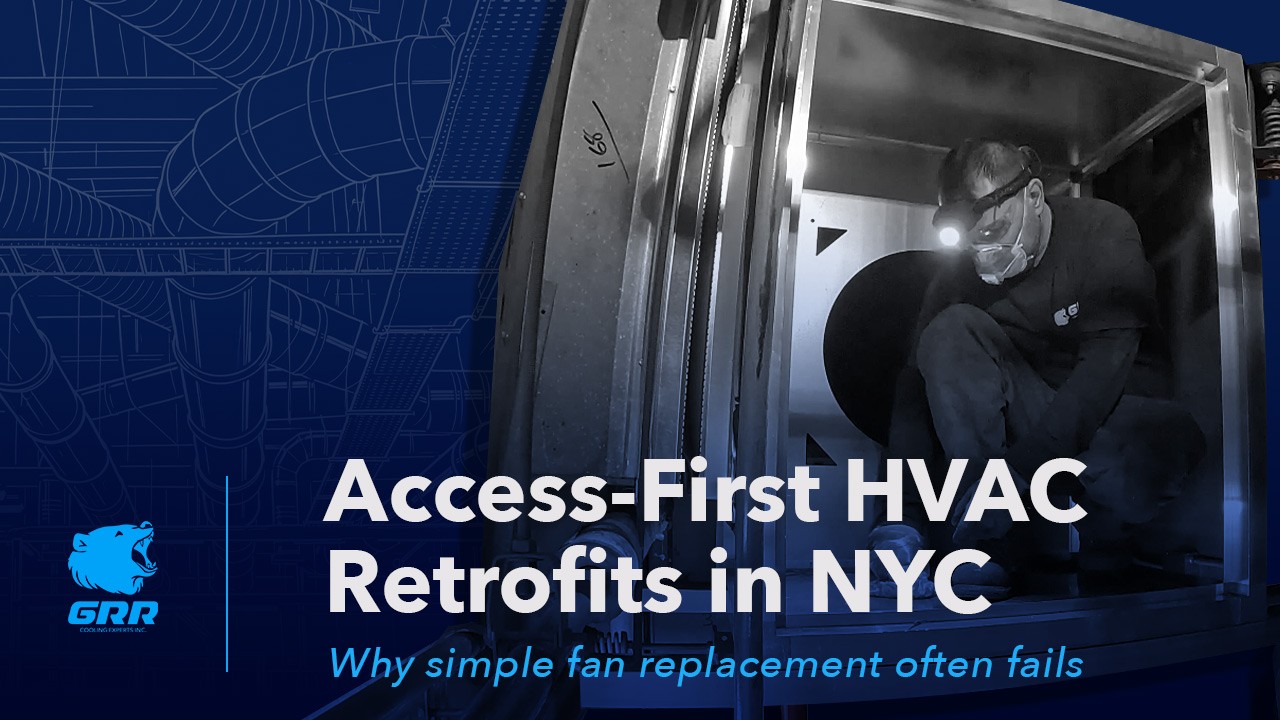
Why Tight Access Turns a Simple Fan Replacement Into an HVAC Retrofit
What older buildings keep proving about access, sequencing, and HVAC retrofit planning
In New York City, older mechanical rooms and ceiling-mounted equipment often turn a simple fan replacement into a constrained retrofit path.
In older buildings, a fan replacement often stops being a simple equipment swap long before the new fan is even selected.
Once the failed unit sits in a tight mechanical space, above a ceiling, behind restricted access, or inside a landlocked section, the job becomes something else. It becomes an HVAC retrofit problem shaped by removal path, fit-up, sequencing, controls, and how stable the system will be after restart.
For building teams in New York City, this is a common reality. In many retrofit environments, access becomes the real constraint. The fan itself is only one part of the job. That same “field reality over brochure logic” framing already appears across GRR’s NYC retrofit content, especially around time offline, access constraints, and recovery planning.
Short answer: In tight-access buildings, fan replacement often becomes a retrofit because access path, removal sequence, fit-up, and restart stability matter as much as the fan itself.
If your team is evaluating HVAC retrofit work in older buildings, start with the access path, not just the equipment schedule.
HVAC Retrofit Services in NYC
Why access becomes the real constraint
On paper, fan replacement looks straightforward. Remove the failed fan. Install the new one. Reconnect. Restart.
In the field, older buildings rarely cooperate.
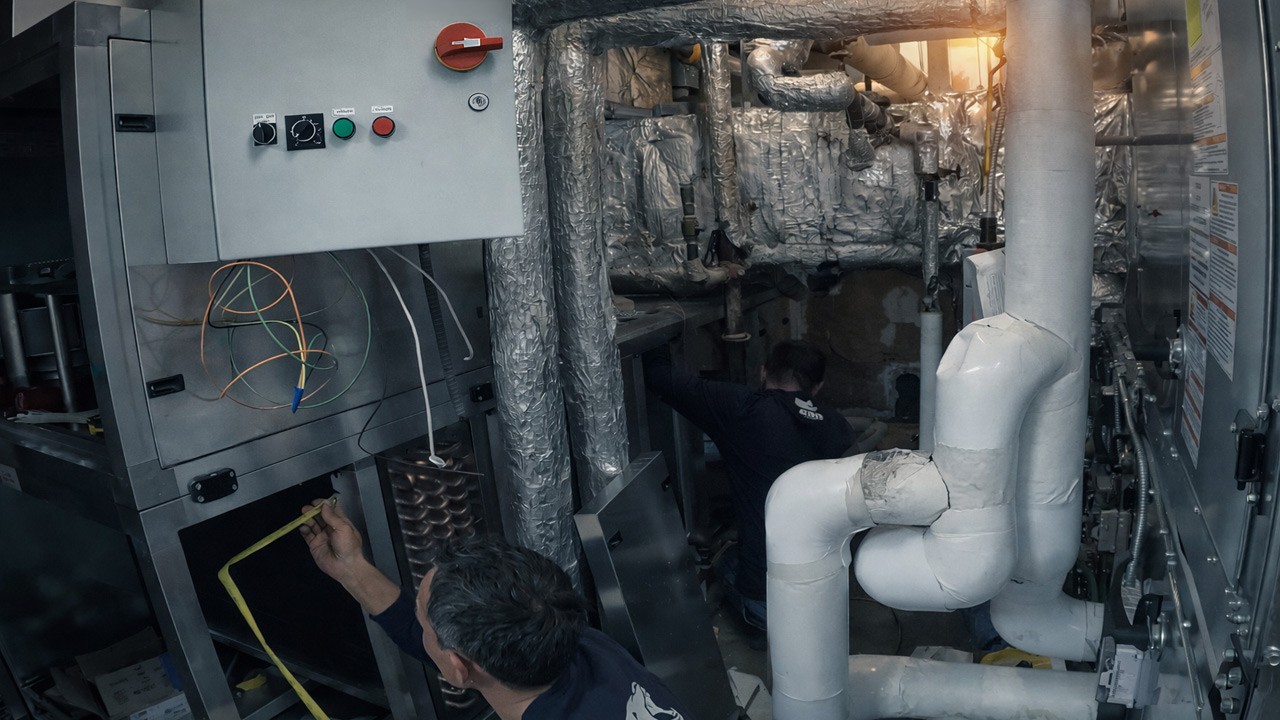
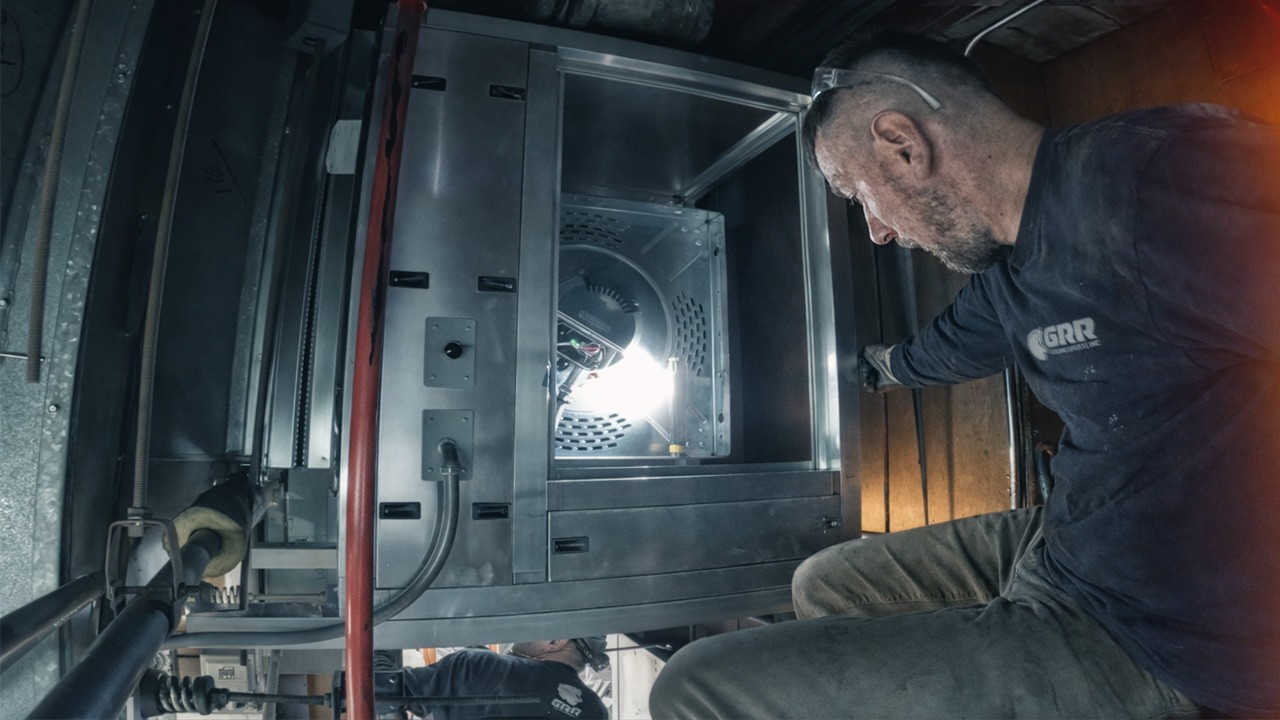
Mechanical rooms are often tighter than drawings suggest. Ceiling-mounted locations reduce working space. Existing ductwork may not line up cleanly with a replacement solution. Removal paths are limited. Access for tools, material handling, and fit-up can become the main difficulty before the replacement even begins.
That is why these jobs are often underestimated. The equipment is visible. The access problem is not.
This is also consistent with GRR’s existing NYC retrofit guidance: what decides success in the field is usually access, replacement path, sequence, controls dependency, and verification, not just airflow and static pressure on paper.
Local Law 97 adds another layer to this decision because older HVAC systems are no longer evaluated only by whether they can still run. See our related guide on Local Law 97 HVAC retrofit decisions in NYC.
What changes once access is limited
Once access is constrained, the project changes in four important ways.
Removal becomes part of the engineering problem
The old fan may not come out the way it originally went in. In older buildings, original equipment was often installed under very different construction conditions. Today, demolition, cutting, disassembly, and staged removal may be required.
Fit-up becomes custom
A replacement fan package may require reducers, transitions, canvas connections, or support adjustments to integrate with the existing system. In tight spaces, even small dimensional differences matter.
Sequence matters more than the fan alone
What gets disconnected first, what gets removed next, what can be staged where, and when airflow can safely be restored all become part of the retrofit plan.
Restart stability becomes a real risk factor
The goal is not just to make the fan run. The goal is to restore stable airflow that the building can trust. That same principle is central to GRR’s “time offline” article, where the real KPI is stable recovery, not just the minutes the fan is stopped.
Once access becomes the governing constraint, the retrofit should follow a clear sequence from removal-path review through verified airflow.

Image: An access-first HVAC retrofit planning sequence, from confirming the removal route to adapting the system and verifying final airflow.
That is why time offline is not just “fan stop time.” It includes removal, fit-up, reconnect, restart, and the time needed to bring the system back to predictable operation.
EC vs AC Fans in NYC (Part 2). Time Offline: The retrofit KPI nobody specs for
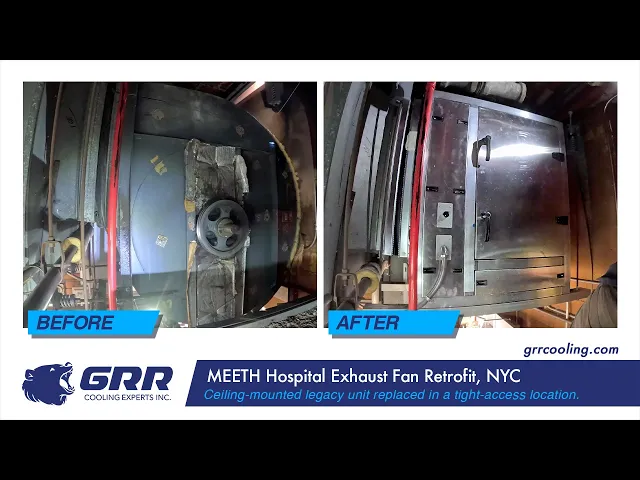
Case example: MEETH Hospital
A recent MEETH Hospital project shows this clearly.
The failed ceiling-mounted exhaust unit sat in a tight-access mechanical location where replacement had to be planned around the physical realities of the space, not just the airflow requirement. The installed replacement solution was rated for 6,000 CFM at 2 in.wg. static pressure, with new duct adaptation, airflow control, and final sealing to restore stable exhaust performance.
The lesson from this job is not just that a fan was replaced.
The lesson is that the job had to be treated as a constrained retrofit path. Access, removal, fit-up, and restart were all part of the engineering problem.
Full MEETH case page>
What building teams often underestimate
In many older buildings, the instinct is to treat a failed fan as a simple replacement event.
But once the installation path is limited, that logic starts to break down.
What is often underestimated:
how difficult removal becomes in tight spaces
how much duct adaptation may be required
how sequencing affects downtime and restart risk
how much harder stable recovery becomes when access is poor
For many facility teams, that is the real shift in thinking: the job is no longer only about replacing a fan. It is about planning the path to get the work done inside an existing building.
What this means for facility teams
For facility and building operations teams, tight-access retrofit work usually changes the conversation in three ways:
the access path needs to be scoped before final equipment decisions are made
the replacement path can drive cost and disruption more than the fan itself
a successful restart matters more than simply finishing the install
That is especially true in older buildings, critical spaces, and active environments where shutdown windows are limited and recovery needs to be predictable.
Where EC motor technology can matter
Not every tight-access retrofit automatically points to the same technical solution.
But in many retrofit environments, compact fan solutions using EC motor technology become part of the answer because installation practicality, controllability, and fit-up matter alongside airflow performance.
In the field, EC motor technology can help because:
speed can be adjusted more precisely during recovery
airflow can be tuned more cleanly after restart
compact solutions may fit better where traditional replacement paths are harder
When the existing fan is too large for the access path, modular EC fan array retrofits inside existing AHUs can sometimes create a more practical retrofit path while improving service access, airflow control, and long-term reliability.
Important: EC technology alone does not solve the job. Access, sequence, compatibility, and verification still decide the outcome. That same idea is built into GRR’s retrofit guidance: motor choice matters, but field execution decides success.
In critical environments, access planning should also account for redundancy and serviceability, not only whether the replacement fan can physically fit. For systems where airflow continuity matters, EC fan array redundancy for critical HVAC systems becomes part of the retrofit conversation.
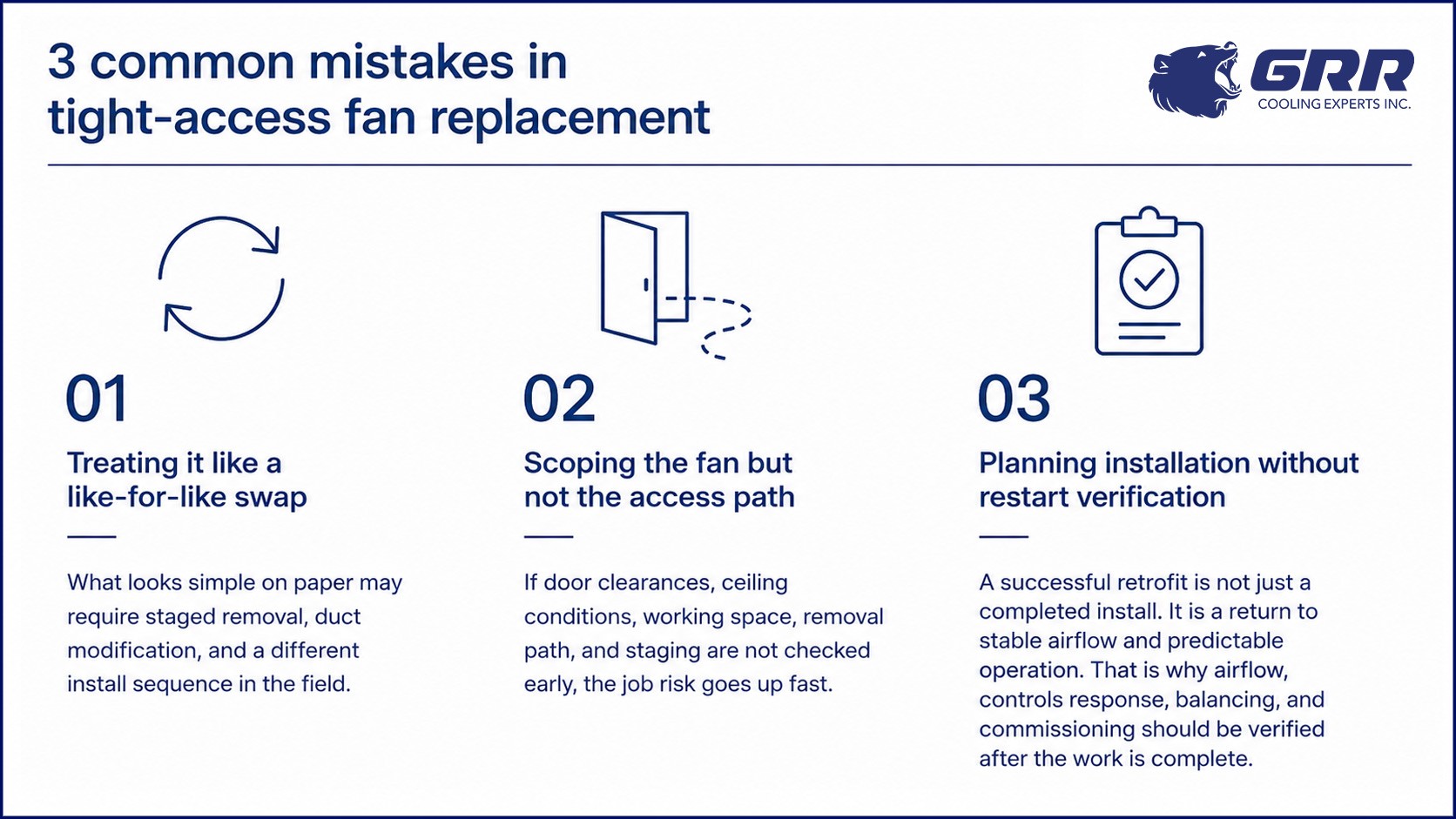
3 common mistakes in tight-access fan replacement
Treating it like a like-for-like swap
What looks simple on paper may require staged removal, duct modification, and a different install sequence in the field.
Scoping the fan but not the access path
If door clearances, ceiling conditions, working space, removal path, and staging are not checked early, the job risk goes up fast.
Planning installation without restart verification
A successful retrofit is not just a completed install. It is a return to stable airflow and predictable operation. That is why airflow, controls response, balancing, and commissioning should be verified after the work is complete.
GRR FIELD GUIDE
Download GRR Field Problem Notes, Volume 1
Tight-access retrofit work is rarely an isolated installation issue. GRR Field Problem Notes, Volume 1 connects access review with shutdown-window sequencing and verified restart in one practical visual guide for facility and engineering teams.
View / Download the Field Guide
Explore all GRR HVAC retrofit guides
When this matters most
This kind of access-first planning matters most in:
older hospitals and healthcare facilities
labs and critical ventilation environments
occupied buildings with tight shutdown windows
ceiling-mounted or landlocked mechanical spaces
retrofit projects where airflow stability matters more than simple replacement speed
It also applies more broadly to older commercial buildings where equipment has been left in place for years because access made replacement feel harder than it should be.
FAQ
Q: Why do fan replacements become difficult in older buildings?
A: Older buildings often limit access, working space, staging, and removal paths. Once those constraints appear, the job becomes more than equipment replacement and starts requiring retrofit planning.Q: What makes tight-access fan replacement different from a normal replacement?
A: Tight-access work adds removal constraints, fit-up issues, sequencing challenges, and restart risk. The harder the access, the more important planning becomes before equipment is selected.Q: When does a fan replacement become an HVAC retrofit?
A: A fan replacement becomes an HVAC retrofit when access, removal path, duct adaptation, controls, and restart stability become part of the engineering scope.Q: Can modular EC fan arrays help in tight-access retrofit work?
A: In some cases, yes. Modular EC fan arrays can fit more practically inside existing AHU sections than one large fan assembly, while also improving service access, airflow control, and redundancy planning.Q: What should facility teams check before replacing a fan in a tight mechanical space?
A: Teams should check the removal path, door and ceiling clearances, working space, duct transitions, controls dependencies, shutdown window, and how airflow will be verified after restart.
Final Takeaway:
A simple fan replacement becomes an HVAC retrofit when the building itself starts shaping the path of the work.
That is what tight-access projects keep proving. In older buildings, success depends on more than fan selection. It depends on access verification, removal strategy, fit-up, sequencing, and stable recovery after restart.
For a broader planning view, facility teams can use GRR’s framework to decide whether a commercial AHU should be repaired, retrofitted, or replaced.
When those factors are scoped early, the job becomes more predictable. When they are ignored, even a small replacement can become a much larger problem.
Need help evaluating a tight-access retrofit path in an older building?
Request an engineering site assessment