

EC vs AC Fans for NYC HVAC Retrofits: What Facility Teams Should Compare
EC vs AC Fans for NYC HVAC Retrofits: What Facility Teams Should Compare
Choosing between an EC fan solution and a conventional AC fan system is not simply a motor-efficiency decision.
For an existing air handling unit, the better choice depends on the required airflow and static pressure, operating profile, physical access, controls, electrical conditions, redundancy requirements, service strategy, shutdown window, and condition of the existing AHU.
In New York City, those retrofit conditions can matter as much as the fan technology itself.
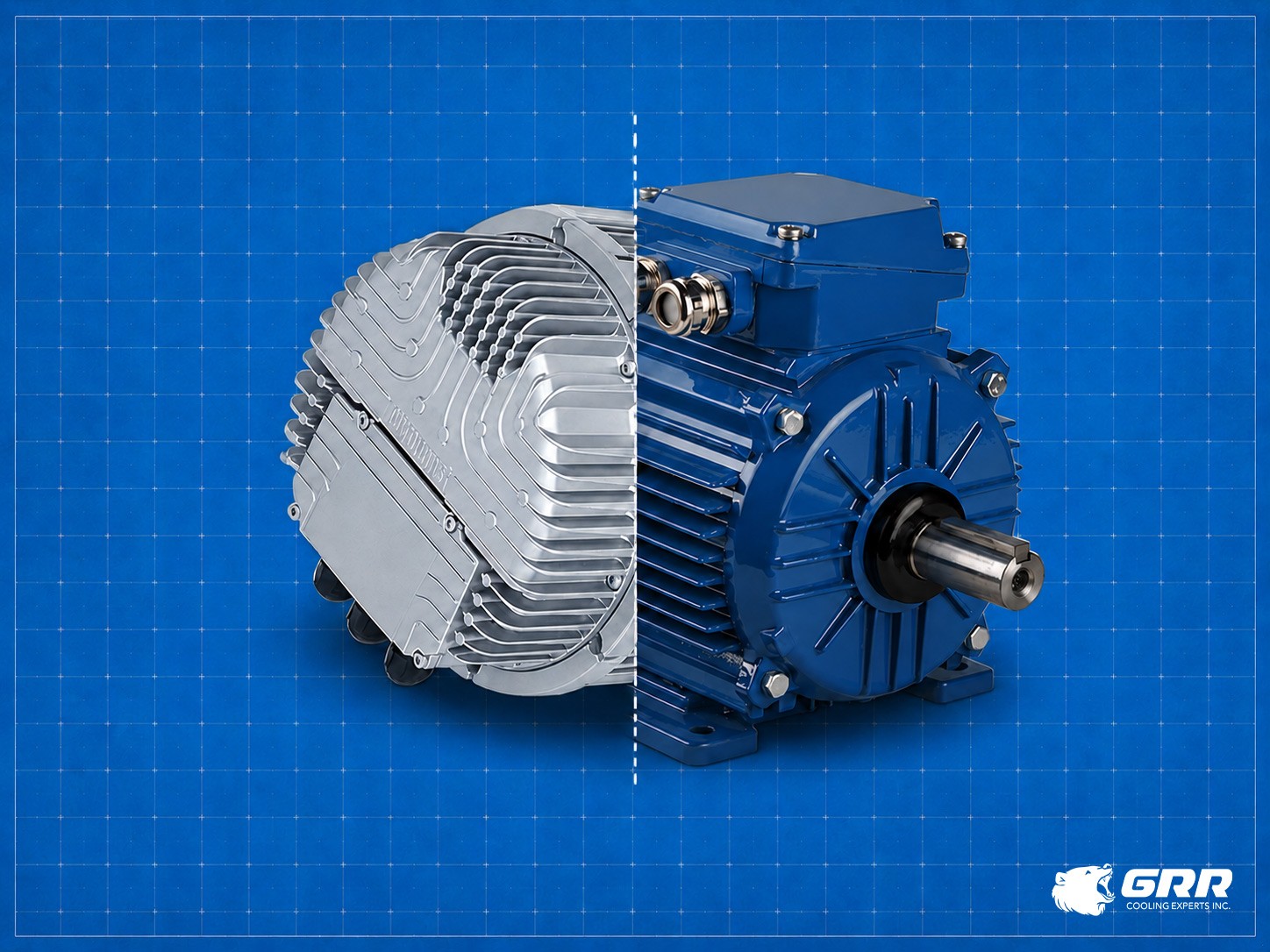
Short Answer
EC fans are often a strong fit for HVAC retrofits that need variable-speed operation, modular installation, redundancy, reduced belt maintenance, or better service access. AC motor and VFD systems can still be the better choice where existing infrastructure supports them, the duty is straightforward, standard components are preferred, or project economics favor a conventional solution.
The correct decision should be based on the complete fan system and the building around it, not on the motor type alone.
EC vs AC Fans at a Glance
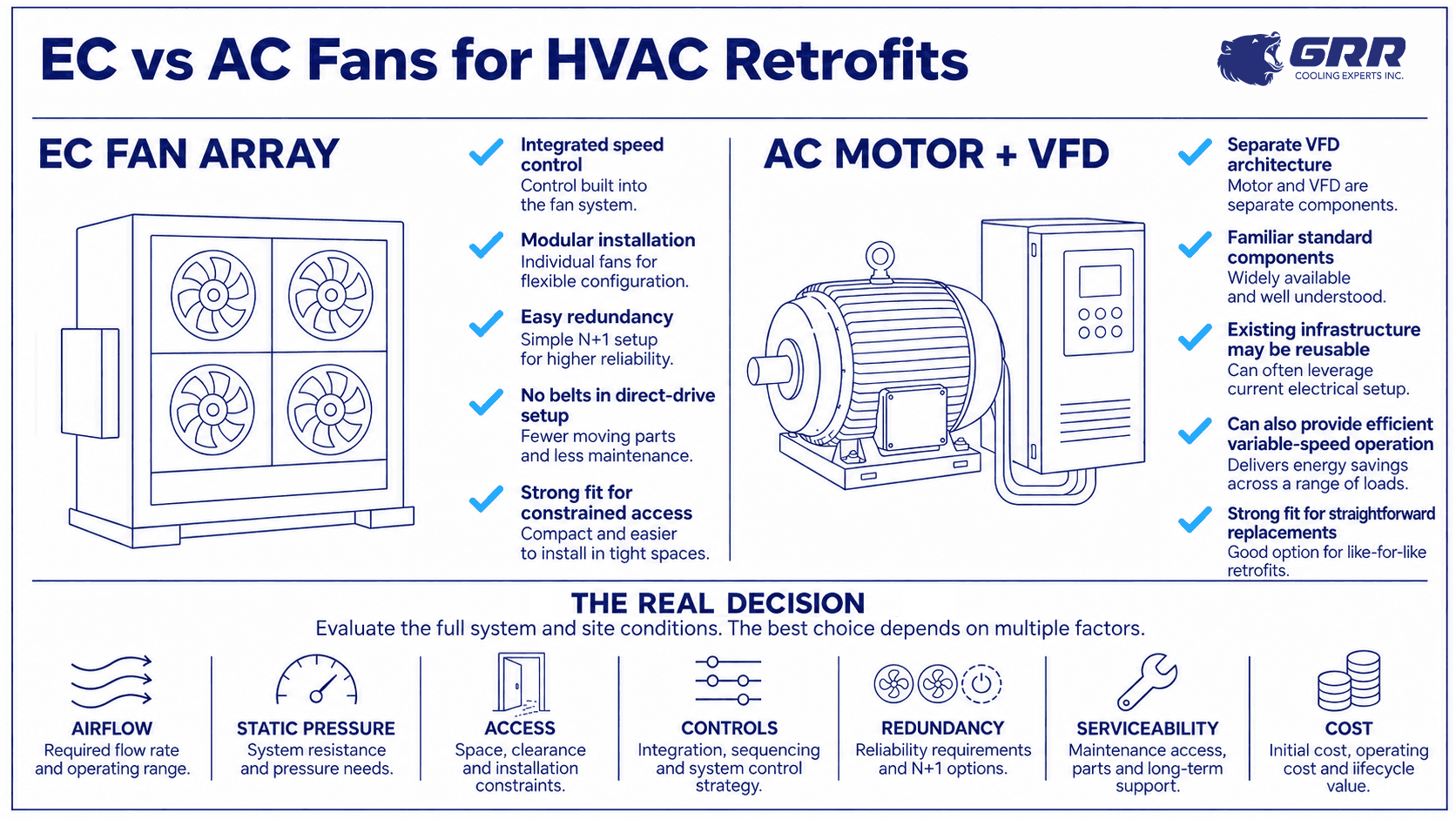
Comparison Table
Decision Factor | EC Fan / EC Fan Array | AC Motor + VFD | What Matters in a Retrofit |
|---|---|---|---|
Airflow & static pressure | Available across a wide performance range depending on fan selection | Available across a wide performance range depending on fan and motor selection | Start with the actual duty point |
Variable-speed control | Typically integrated into EC motor electronics | Usually provided through a separate VFD | Both can provide effective variable-speed control |
Part-load operation | Often strong because motor and controls are integrated for variable-speed use | Can also perform efficiently with a properly selected motor and VFD | Compare actual operating profile |
Redundancy | Easy to engineer with multiple EC modules in a fan array | Possible with multiple AC fans, depending on system architecture | Redundancy comes from system design |
Physical access | Smaller modules can simplify installation in restricted spaces | Large conventional assemblies may require more access | Doorways, corridors and rigging often influence NYC retrofit decisions |
Mechanical maintenance | Direct-drive arrangements eliminate belts | Depends on whether the system is belt-driven or direct-drive | Compare the complete mechanical arrangement |
Controls architecture | Speed control is typically integrated | Motor, VFD and controls remain separate components | Existing BAS and electrical infrastructure matter |
Service strategy | Individual modules can often be replaced independently | Standard motors and VFDs may be easier for some facilities to source locally | Spare-parts strategy matters |
Initial cost | Can be higher depending on configuration | Can be lower where existing infrastructure can be reused | Compare lifecycle cost |
Best fit | Variable loads, redundancy, constrained access, modular retrofits | Straightforward duty, existing VFD infrastructure, standardized service strategy | There is no universal winner |
What Are We Actually Comparing?
The phrase “EC vs AC fan” can oversimplify the decision.
An EC fan typically combines the fan, electronically commutated motor, and variable-speed electronics into an integrated package.
A conventional AC solution may use:
an AC induction motor;
a separate VFD;
a belt drive or direct-drive arrangement;
one fan or multiple fans;
separate control and electrical components.
With EC technology, the motor and electronic control package are typically integrated into the fan assembly. ZIEHL-ABEGG describes its ECblue technology as using an integrated controller tailored to the fan.
That distinction matters.
A comparison between a 40-year-old belt-driven AC fan and a new direct-drive EC fan array is not simply an EC motor versus AC motor comparison.
It is often a comparison between two very different fan-system architectures.
For facility teams, the better question is:
Which complete fan system best fits the required duty, existing AHU, building access, controls, operating risk, and long-term maintenance strategy?
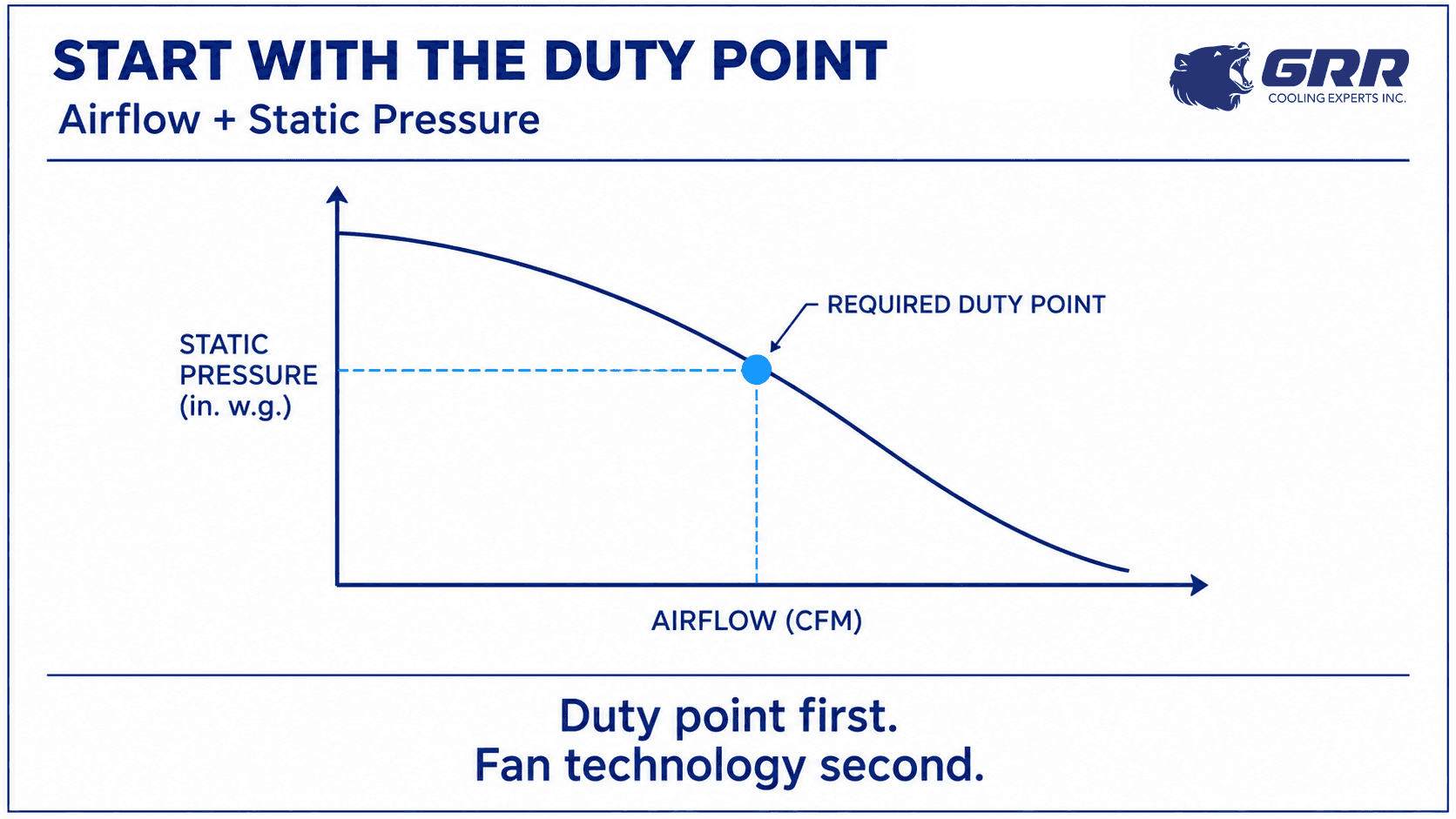
1. Start With Airflow and Static Pressure
The first question should not be:
EC or AC?
It should be:
What airflow and static pressure must the system actually deliver?
Before selecting a retrofit fan system, GRR reviews factors such as:
required CFM;
total static pressure;
existing fan performance;
coil and filter pressure drop;
duct conditions;
operating range;
available fan-section dimensions.
Both EC and AC fan systems can be engineered for demanding HVAC applications.
The motor technology does not remove the need for proper fan selection.
A highly efficient motor or fan operating at the wrong point can still produce a poor system result.
For older NYC AHUs, original nameplate information may also be incomplete or no longer represent how the building operates today. Airflow requirements and system resistance should therefore be checked against current conditions whenever practical.
Engineering rule: Duty point first. Motor technology second.
2. Efficiency: Compare the Whole System
EC technology is attractive because electronically commutated motors can provide high motor efficiency and strong variable-speed performance.
But that does not mean every EC retrofit automatically produces a fixed percentage of energy savings.
Actual fan energy depends on:
required airflow;
static pressure;
operating hours;
fan efficiency;
motor efficiency;
drive efficiency;
control strategy;
system resistance;
how often the system operates at part load.
AC motors combined with properly applied VFDs can also deliver efficient variable-speed operation.
Actual fan energy depends on the complete fan system and its operating point, including the fan, motor, drive or controller, airflow and pressure requirements. Fan system efficiency and operating point.
The correct comparison is not:
EC is efficient. AC is inefficient.
It is:
Which complete fan system will use less energy across this building's actual operating profile?
Where EC often gains an advantage
EC becomes especially attractive when:
the fan runs many hours per year;
airflow demand changes throughout the day;
several smaller fans operate together;
the existing system has mechanical belt losses;
integrated modulation simplifies control.
Where the difference may be smaller
The energy gap may be less important when:
the system operates close to one constant duty point;
annual runtime is limited;
a high-efficiency AC motor and correctly selected VFD are already installed;
another system restriction is driving energy use.
For NYC owners evaluating building energy performance and Local Law 97 exposure, fan-energy reduction can contribute to broader building-performance improvements. See HVAC retrofit planning under NYC Local Law 97.
3. Speed Control and BAS Integration
One practical difference between EC and conventional AC systems is where the speed-control electronics live.
With EC technology, the motor and electronic control package are typically integrated into the fan assembly.
Depending on the manufacturer and model, control options may include:
analog speed control;
digital communication;
operating status;
alarms;
monitoring;
BAS integration.
A conventional AC arrangement usually separates:
AC motor + VFD + controls
This is not automatically a disadvantage.
Many facilities already have established VFD infrastructure, control standards, spare drives, and technicians familiar with those systems.
The decision should consider:
existing BAS;
available control signals;
airflow or pressure-control strategy;
safeties;
alarms;
smoke/fire sequences where applicable;
electrical distribution;
facility maintenance standards.
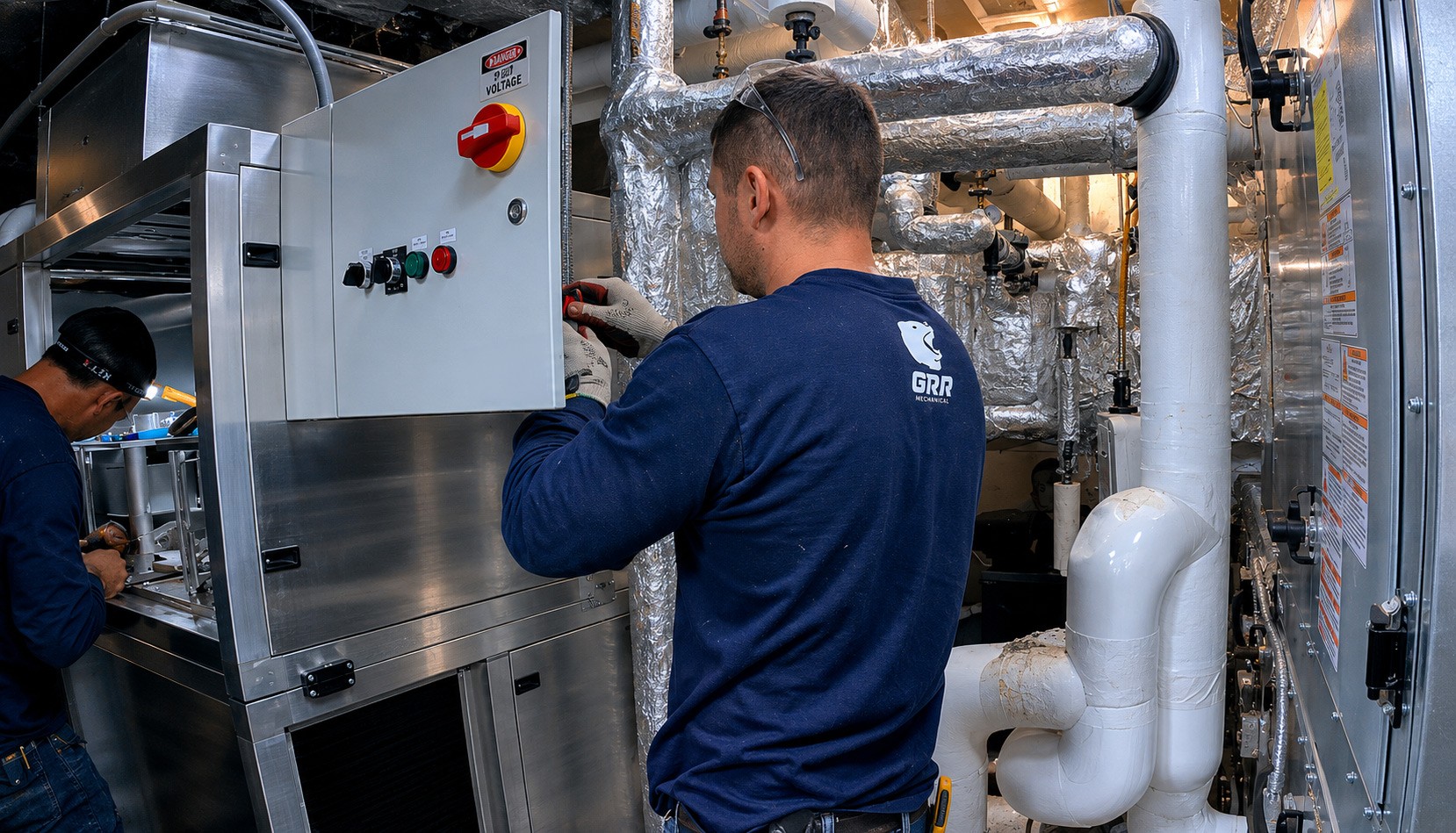
For a retrofit, controls should be part of the design before the shutdown begins.
4. Redundancy: EC Does Not Automatically Mean N+1
This distinction is important.
Redundancy is a system-design decision, not an automatic property of an EC motor.
One EC fan is still one fan.
The redundancy advantage appears when multiple fan modules are engineered to operate together in a fan array.
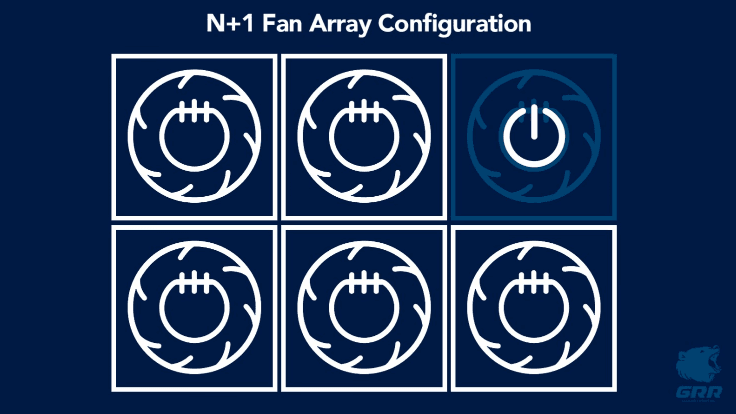
For example, an N+1 configuration includes enough installed fan capacity that the required operating condition can still be supported after one fan module becomes unavailable, within the limits of the system design.
For hospitals, operating rooms, laboratories, and other critical environments, that architecture can be valuable because a single fan fault does not necessarily become an immediate full-system shutdown.
Potential advantages include:
continued airflow after a module fault;
scheduled rather than emergency replacement;
individual module service;
improved operational visibility through controls.
However, redundancy must be engineered against the required airflow and static pressure.
It should never be assumed simply because multiple fans are present.
5. Physical Access Can Change the Decision
This is where NYC retrofit reality often changes a textbook equipment comparison.
Many large fans inside older New York buildings were installed when the building was originally constructed.
Decades later, the replacement path may include:
narrow mechanical-room doors;
elevators;
stairwells;
occupied corridors;
roof restrictions;
limited rigging access;
permanent walls or utilities added after the original installation.
A like-for-like replacement that looks simple on a drawing may become difficult once the actual equipment path is surveyed. This is why tight-access HVAC retrofit planning in NYC should be considered before replacement equipment is selected.
This is one reason modular fan systems can be attractive.
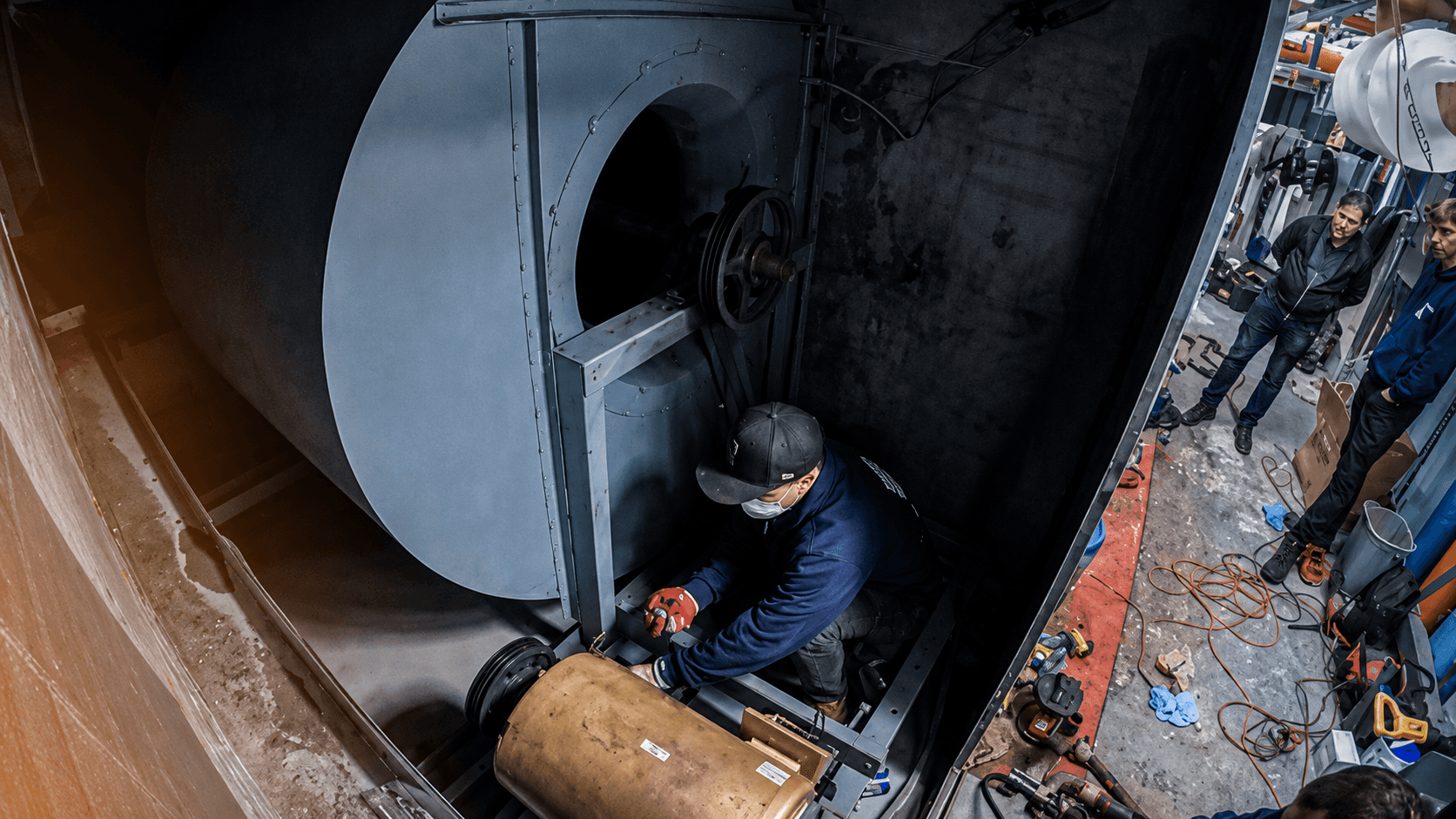
Instead of moving one large fan assembly into the building, individual fan modules can often be transported separately and assembled inside the existing AHU or fan section.
For some projects, this can reduce:
structural demolition;
heavy rigging;
crane dependency;
access modifications;
installation risk.
But EC itself is not the access solution.
The advantage comes from the modular architecture frequently used with EC fan arrays.
The full route from loading area to final fan position should be checked before equipment is ordered.

6. Maintenance and Serviceability
The maintenance comparison also needs to look beyond the motor.
A traditional belt-driven fan system may require attention to:
belts;
sheaves;
bearings;
alignment;
belt tension;
motor condition.
A direct-drive EC fan removes the belt transmission between the motor and impeller.
That can reduce routine mechanical maintenance.
In a modular array, an individual fan may also be easier to remove and replace than one large fan assembly.
However, EC systems introduce another consideration:
integrated power electronics.
Facility teams should understand:
module availability;
expected replacement lead time;
spare-fan strategy;
manufacturer support;
control compatibility;
whether replacement modules require configuration.
A conventional AC motor and VFD system may remain attractive in facilities that strongly prefer standardized, locally available motors and drives.
Neither approach is maintenance-free.
The better system is the one the facility can realistically support after installation.
7. Initial Cost vs Lifecycle Cost
EC technology can carry a higher initial equipment cost, particularly when the retrofit includes:
multiple fan modules;
a new control panel;
structural framing;
wiring;
BAS integration;
commissioning.
A conventional AC fan or motor/VFD replacement may have a lower initial cost where much of the existing infrastructure can remain.
But purchase price is only one part of the decision.
A lifecycle comparison should consider:
annual fan energy;
operating hours;
expected part-load operation;
belt and mechanical maintenance;
spare parts;
unplanned downtime;
service labor;
controls maintenance;
expected equipment life;
installation logistics;
shutdown cost.
For a critical facility, avoiding one major unplanned airflow interruption may matter more than a small difference in motor efficiency.
For another building, simple first cost may be the dominant factor.
That is why a credible retrofit analysis should show the assumptions behind the economics rather than promise a generic payback period.
8. Shutdown Window and Installation Risk
Equipment selection and field execution are connected.
A system can be technically correct and still be the wrong retrofit if it cannot be installed inside the facility's available shutdown window.
Before scheduling the work, the team should know:
How the existing equipment will be removed.
How the new equipment will reach the mechanical room.
What must be fabricated before shutdown.
What electrical work is required.
How controls will be transferred.
What must be tested before restart.
How airflow will be verified before handover.
A modular EC fan array can sometimes simplify this sequence because the replacement system can be staged in smaller components.
But an AC/VFD solution may also be faster when the facility already has compatible equipment, controls, wiring, and replacement components ready.
The shortest shutdown comes from preparation, not from the motor label.
For a deeper look at access, sequencing, controls, startup, and limited work windows, see GRR’s Overnight HVAC Retrofit in NYC: Speed, Control, and Startup Readiness.
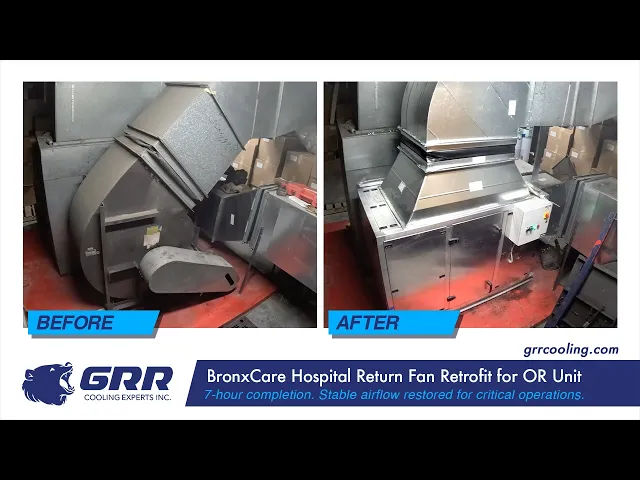
See how retrofit planning, access, installation, controls, and startup come together in the field.
When EC Is Usually the Stronger Retrofit Choice
An EC fan or EC fan array is often worth evaluating when several of the following conditions exist.
Tight access
Large replacement equipment cannot practically reach the existing fan section.
Variable airflow demand
The system spends significant operating time below full load.
Aging belt-driven equipment
Belts, bearings, shafts, alignment or other mechanical components create recurring maintenance.
Redundancy matters
The facility would benefit from N+1 or similar multi-fan resilience.
Service access matters
Individual fan modules can provide a more practical maintenance path than one large assembly.
Existing AHU casing can remain
The fan section is the primary problem while coils, casing, filters and other major components still have useful life.
Controls modernization is already planned
The project provides an opportunity to improve monitoring, staging, alarms and airflow control.
A short shutdown window is required
Modular installation can help simplify field logistics when properly planned.
Hospitals and laboratories often evaluate these factors differently from ordinary commercial buildings because airflow continuity can have direct operational consequences.
When AC + VFD May Still Be the Better Choice
EC should not be treated as the automatic answer.
A conventional AC motor and VFD architecture can remain a strong choice when:
The existing system is already well configured
The fan, VFD, electrical distribution and controls are functional and only a targeted component needs replacement.
Standardized components are a priority
The facility maintains common motors and VFDs across multiple buildings and wants to preserve that service strategy.
Access is straightforward
A conventional replacement can move into the building without major demolition, rigging or shutdown complications.
The operating profile is simple
The fan operates primarily at a stable duty point and the additional advantages of a modular EC system have limited value.
Project economics favor reuse
Existing wiring, drives, controls, framing or other equipment can be retained.
The required duty favors another fan architecture
Some airflow, pressure, environmental, voltage or application conditions may make a different solution more appropriate.
The AHU needs broader replacement anyway
If coils, casing, drain pans, filtration sections, dampers or other major components have also reached end of life, a fan-only retrofit may not solve the actual problem.
This is why GRR does not treat EC technology as a universal retrofit kit.
The building and system decide the solution.
NYC Retrofit Reality: Five Questions That Often Decide the Project
For an existing New York building, these five questions can matter more than the EC-versus-AC label.
1. Can the equipment physically reach the AHU?
Measure:
doors;
corridors;
elevators;
roof access;
turning radii;
mechanical-room clearance.
2. What does the system actually need to deliver?
Verify:
airflow;
static pressure;
operating range;
system resistance.
3. How long can the system be offline?
The available shutdown window can eliminate otherwise reasonable equipment options.
4. What electrical and controls infrastructure already exists?
A solution that requires unnecessary replacement of useful infrastructure may not be the best value.
5. How will the system be maintained five years from now?
Serviceability should be designed before the retrofit, not discovered afterward.

GRR Field Proof
GRR Cooling Experts works on fan and AHU retrofits in existing hospitals, healthcare facilities, laboratories, and large commercial buildings where access, shutdown windows, controls, and restart conditions influence equipment selection.
Case Example 1: Custom Hospital Return Fan Retrofit | 22,035 CFM
Application: Active NYC hospital return-air system
Airflow: 22,035 CFM
Static pressure: 2.38 in. S.P.
Existing system: Traditional tubular inline return fan with legacy belt-driven components
Retrofit constraints: Existing cylindrical geometry, limited acceptable downtime, service access, and reliability requirements
Selected solution: Four direct-drive ZIEHL-ABEGG EC fans in a custom modular fan section with N+1 redundancy
Execution window: Two days under live hospital conditions
Controls: New control panel with speed control, overload protection, BMS integration, 0–10 V control capability, manual mode, and fire-alarm shutdown
Verified result: Stable return airflow restored, N+1 redundancy added, service access improved, belts eliminated, and measured electrical demand reduced from 10.65 kW to 8.71 kW under the same operating conditions.
Why this architecture was selected
The existing tubular fan could not simply be replaced with a standard square fan-array section. GRR engineered a compact modular EC solution around the existing geometry, duct connections, downtime limits, and reliability requirements. The EC fan architecture also made it possible to add N+1 redundancy, modern controls, and improved future service access without rebuilding the entire air-handling system.
Case Example 2: NYC Hospital EC Fan Array Retrofit | 9,000 CFM in 6 Hours
Application: NYC healthcare AHU fan retrofit
Airflow: Approximately 9,000 CFM
Static pressure: Approximately 3 in. S.P.
Existing system: Legacy belt-drive fan assemblies
Retrofit constraints: Six-hour live-facility installation window, airflow continuity, redundancy, controls integration, and limited disruption to hospital operations
Selected fan architecture: Three direct-drive ebm-papst EC blowers with additional capacity engineered for redundancy
Controls: Advanced electrical panel with Carel automation and individual overload protection
Execution window: 6 hours
Verified result: The retrofit was completed with zero disruption to hospital activities. The new system maintained design pressure and consistent airflow while operating below nominal load, with the modular configuration providing a more resilient alternative to the previous single-point-failure belt-driven arrangement.
Why this architecture was selected
This project shows where EC fan-array architecture can provide value beyond motor efficiency. Replacing the legacy belt-driven arrangement with modular direct-drive fans reduced single-point-failure risk, supported redundancy, simplified speed control and commissioning, and allowed the complete retrofit to be executed within a six-hour live operating window.
Seven Questions to Ask Before Choosing EC or AC
1. What are the required airflow and static pressure?
Do not select a replacement based on old motor horsepower alone.
2. What is the actual operating profile?
A 24/7 variable-load system should be evaluated differently from a fan that runs occasionally at one fixed duty.
3. What can physically fit through the building?
Check the complete equipment path before design is finalized.
4. Is redundancy required?
If airflow interruption creates operational risk, define the failure strategy before selecting equipment.
5. What controls already exist?
Understand BAS, VFDs, sensors, safeties, alarms and communication requirements.
6. How will the system be serviced?
Determine spare-parts strategy, module access, component availability and facility preferences.
7. What condition is the rest of the AHU in?
A fan retrofit makes little sense if the casing, coils, drain pans, dampers or duct system require major reconstruction.
EC Fan Array vs AC Fan: The Practical Decision
There is no universal winner.
For many older NYC buildings, an EC fan array can be a strong retrofit tool because it combines compact direct-drive modules, variable-speed operation, modular installation, and the ability to engineer redundancy.
For other systems, a conventional AC motor and VFD arrangement remains technically sound and economically sensible.
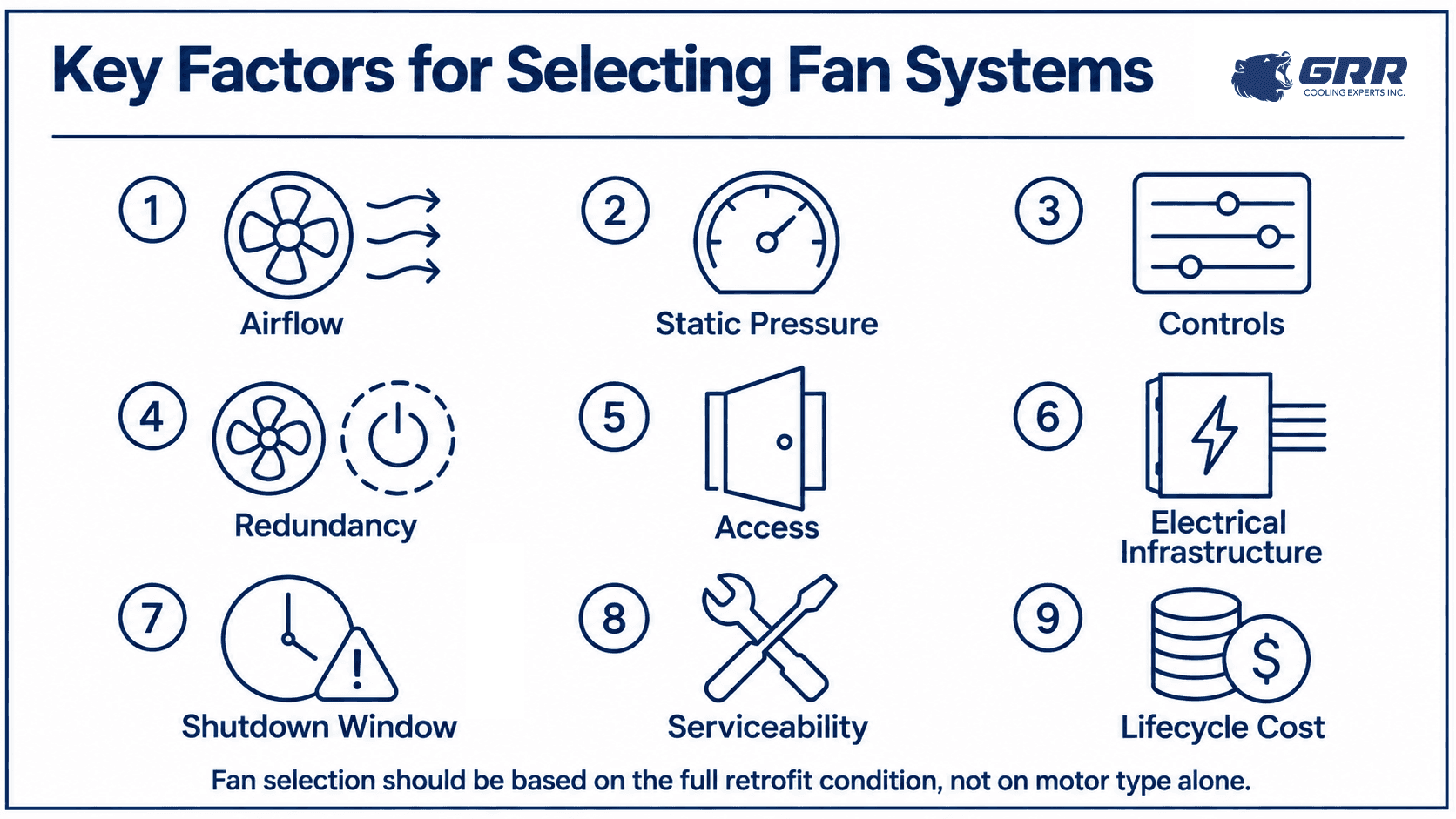
The strongest retrofit decision considers:
Airflow • Static Pressure • Controls • Redundancy • Access • Electrical Infrastructure • Shutdown Window • Serviceability • Lifecycle Cost
Not one specification in isolation.
Related GRR Engineering Guides
Fan Array Retrofits in NYC Hospitals and Commercial Buildings
Main GRR guide covering EC fan array retrofit engineering, applications, access constraints, controls, redundancy, and field examples.
EC Fan Array Retrofits in NYC Hospitals and Commercial Buildings
EC Fan Array Redundancy for Hospital HVAC Retrofits
A deeper look at N+1 configurations, airflow continuity, failure risk, and redundancy in hospitals and other critical environments.
EC Fan Array Redundancy for Hospital HVAC Retrofits in NYC
Why Older NYC Buildings Are Moving From Belt-Driven Fans to EC Fan Arrays
A practical guide to legacy belt-driven fan systems, maintenance, access constraints, serviceability, and why modular direct-drive EC fan arrays can be a stronger retrofit path in older NYC AHUs.
Why Older NYC Buildings Are Moving From Belt-Driven Fans to EC Fan Arrays
Overnight HVAC Retrofit in NYC
A field-focused guide to limited shutdown windows, access planning, equipment fit-up, installation sequencing, electrical readiness, controls, startup, and verified return to service.
Overnight HVAC Retrofit in NYC: Speed, Control, and Startup Readiness
HVAC Retrofit Engineering Services in NYC
For projects requiring evaluation of the broader AHU, fan system, controls, ventilation, access, shutdown window, and commissioning strategy.
HVAC Retrofit Engineering Services in NYC
Frequently Asked Questions
Are EC fans always more efficient than AC fans?
Not automatically. EC motors can provide high efficiency and strong variable-speed performance, but total fan-system efficiency depends on the fan, motor, drive, operating point, airflow demand, static pressure and controls. A properly selected AC motor and VFD can also operate efficiently.
Is an EC fan array the same thing as an EC motor?
No. An EC motor is a motor technology. An EC fan array is a system architecture using multiple fan modules, typically direct-drive EC fans, operating together. Features such as N+1 redundancy come from the array design, not from the EC motor alone.
Do EC fans need VFDs?
Typically, EC fans use integrated electronic speed control and do not require a separate external VFD for normal speed modulation. ZIEHL-ABEGG ECblue fans, for example, can accept a 0–10 V speed signal and support MODBUS-based control depending on the model. (ziehl-abegg.com)
Technical source: ZIEHL-ABEGG ECblue Control Modules
Can AC fans provide variable-speed operation?
Yes. AC motors combined with properly selected VFDs are widely used for variable-speed HVAC fan operation. AMCA notes that a standard AC motor requires a VFD when variable-speed control is needed, while the VFD allows the fan speed to be adjusted to system demand. (amca.org)
Technical source: AMCA: Retrofitting with EC Fan-Array Technology
Which is better for an older NYC AHU?
It depends on the system. EC fan arrays are often attractive when access is tight, belt-driven equipment is aging, redundancy is important, or modular installation helps reduce field complexity. AC/VFD solutions may remain preferable where existing infrastructure can be reused and access or redundancy is not a major constraint.
Can EC fan arrays handle high static pressure?
They can in many applications, but performance must be checked against the required airflow and static pressure using actual fan-selection data. Motor technology alone does not determine whether the fan can meet the duty.
Does an EC fan array automatically provide redundancy?
No. Redundancy must be engineered into the array. An N+1 design requires enough remaining fan capacity to support the required operating condition after one module becomes unavailable.
Are EC fan arrays useful only in hospitals?
No. They can also be applied in laboratories, pharmaceutical facilities, institutional buildings, large commercial buildings and other existing facilities. Hospitals are a particularly strong use case because serviceability and airflow continuity may carry greater operational importance.
How should a facility compare EC and AC retrofit costs?
Compare more than equipment price. Include installation access, electrical work, controls, energy use, operating hours, maintenance, replacement parts, service strategy, downtime exposure and expected equipment life.
Should an old AHU always receive a fan retrofit instead of being replaced?
No. If the casing, coils, drain pans, dampers, filtration sections, electrical infrastructure or other major components have also reached the end of useful life, broader AHU modernization or full replacement may make more sense.
Planning a Fan Retrofit in an Existing NYC Building?
GRR Cooling Experts evaluates the complete retrofit condition, not only the fan motor.
We review:
airflow and static pressure;
existing AHU condition;
physical access;
fan-system options;
electrical requirements;
controls and BAS integration;
redundancy;
shutdown window;
installation sequence;
startup and verification;
future service access.
Tell us what is installed now, what the system needs to deliver, and what constraints the building creates.