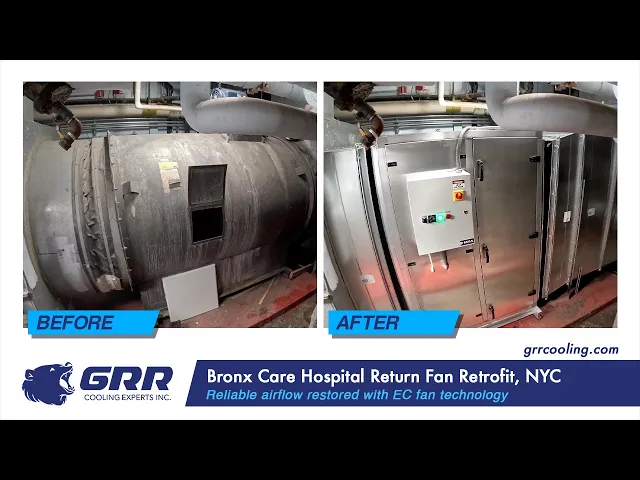
Custom Hospital Return Fan Retrofit
Custom Hospital Return Fan Retrofit
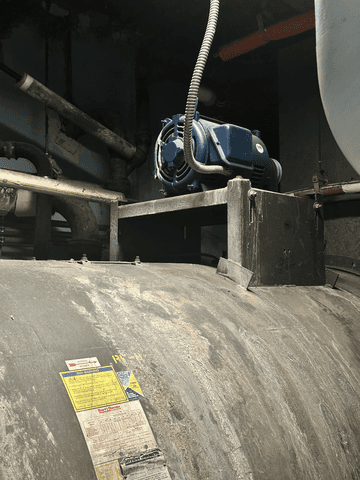
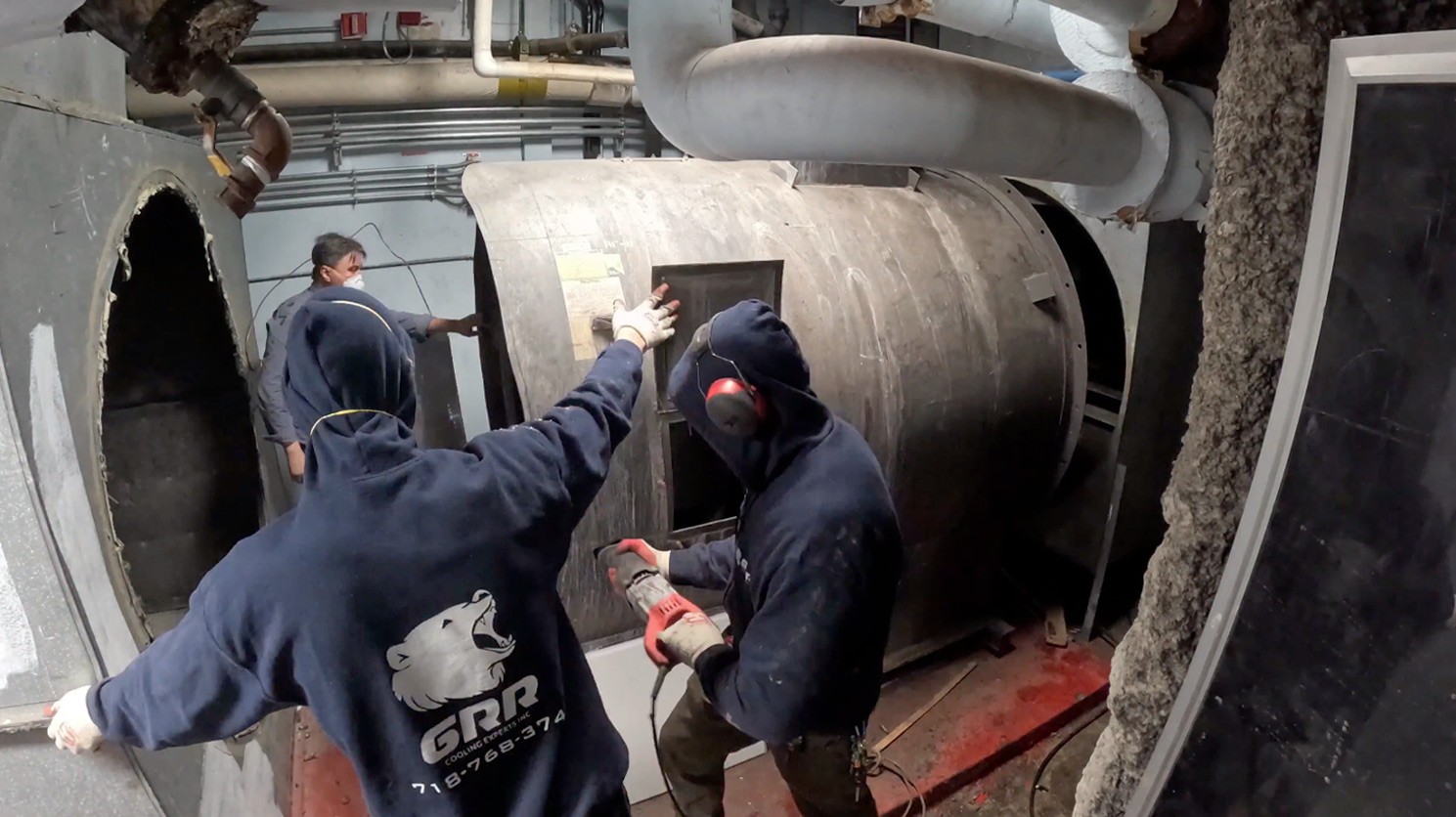
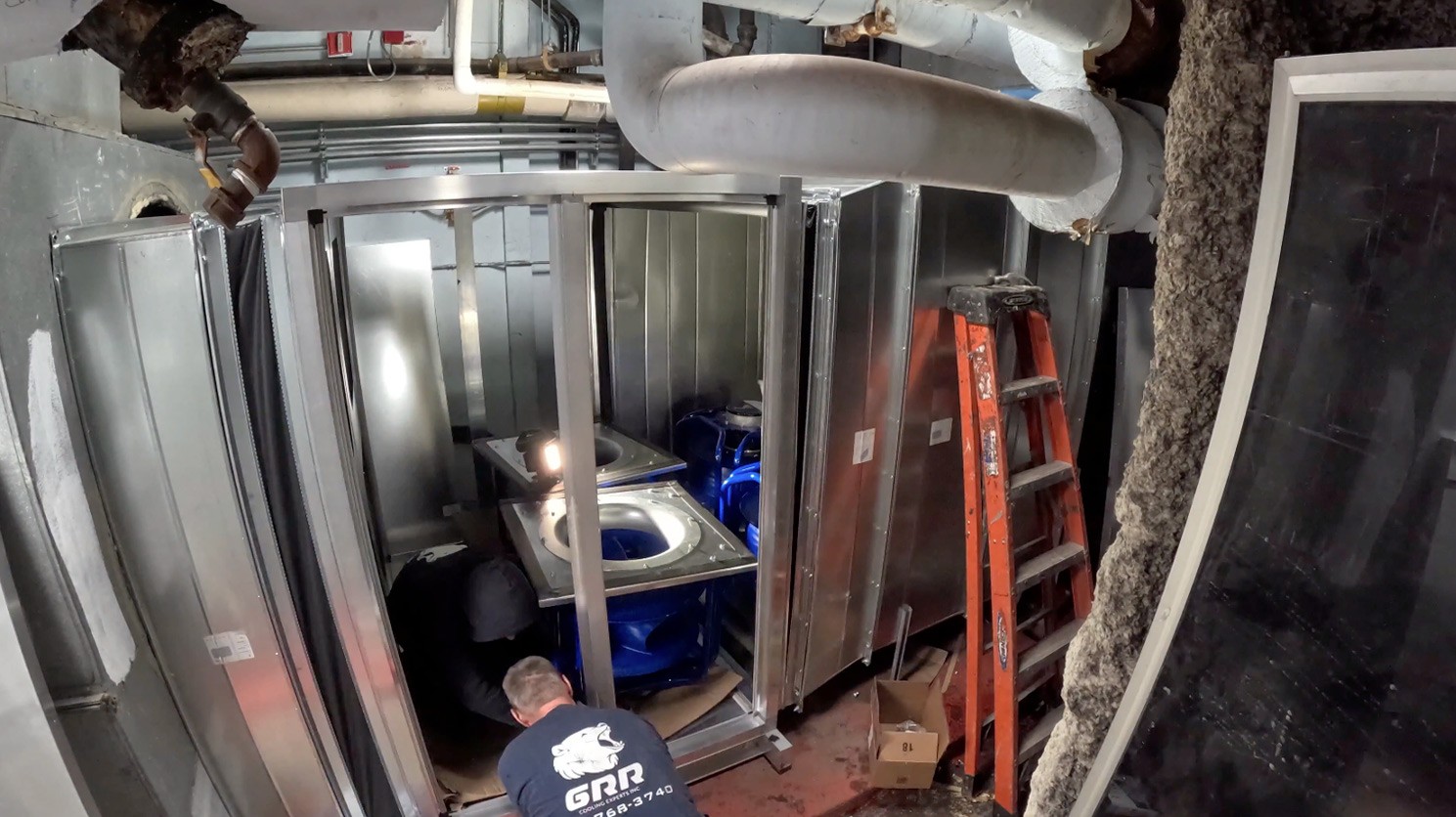
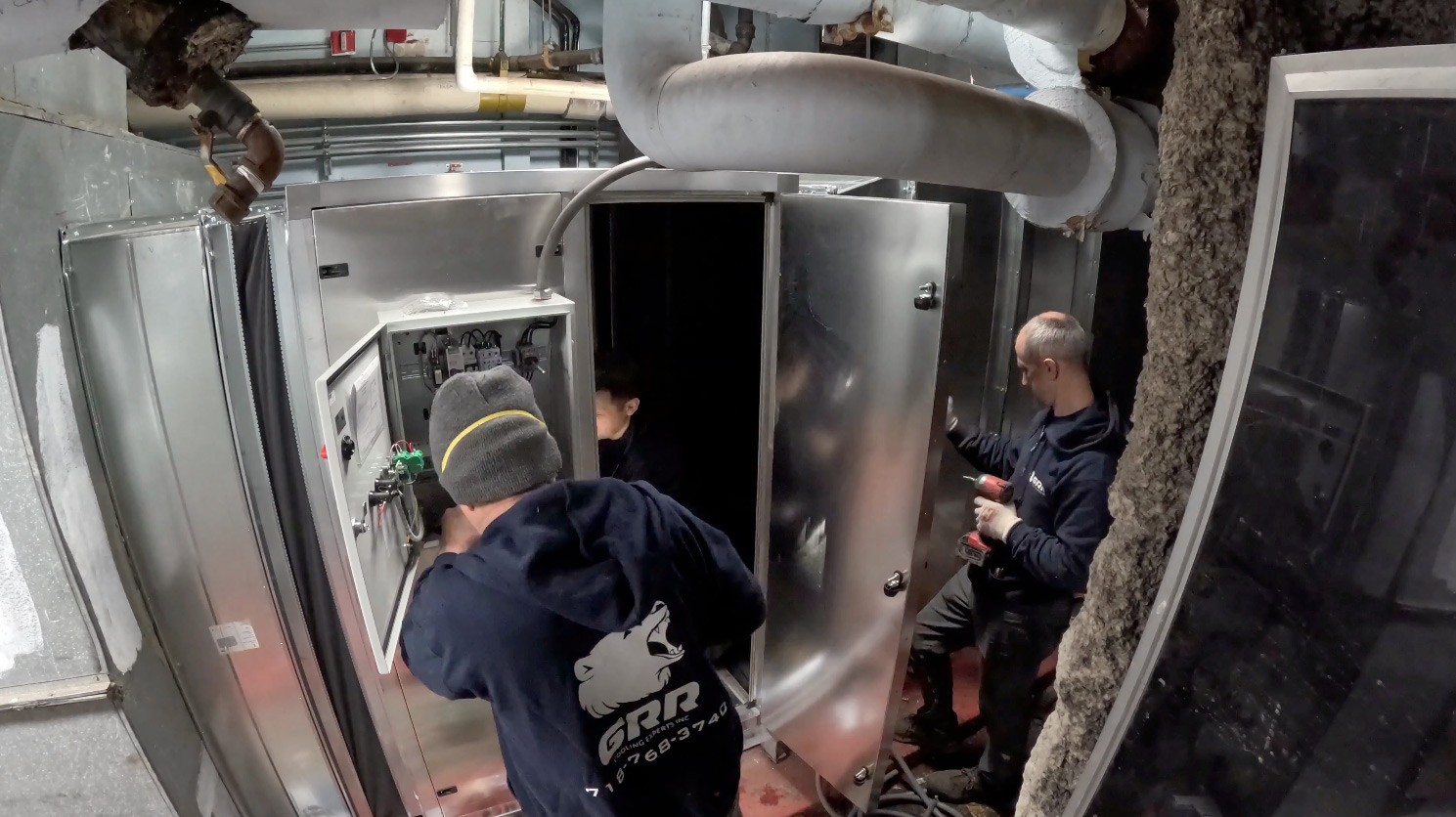
This project focused on replacing an outdated return fan system with a modern EC-based solution designed for real retrofit conditions inside an active hospital, similar to the broader hospital HVAC retrofit work GRR Cooling Experts delivers across NYC.
The Challenge
Healthcare environments depend on stable and controllable airflow. At BronxCare Hospital, the existing RF-8 return fan system supported ventilation for the first and second floors, directly affecting occupied patient areas where reliability and continuous operation were essential.
The original installation was built around a traditional tubular inline fan. Over time, the system had already gone through multiple repairs, including motor and belt replacements. When a bearing replacement became necessary, the situation changed. Completing that repair would have required full disassembly and removal of the fan, creating downtime that was not acceptable in an active hospital environment.
A second challenge was geometry. Modern fan array solutions are typically built around square modular sections, while the legacy installation was based on a cylindrical tubular fan casing. That difference creates a real limitation in many retrofit situations and makes a standard equipment swap impossible.
This project required more than replacement. It required a custom retrofit approach that could fit within the limits of the original installation while improving reliability, controllability, and long-term serviceability.
This was not a standard replacement. It required a coordinated retrofit approach adapted to the building’s existing conditions. Related reading: https://grrcooling.com/news/emergency-hospital-hvac-response-nyc
The Solution
GRR Cooling Experts partnered with Baikal Mechanical to develop a custom return fan retrofit that could fully replace the existing tubular fan system within the constraints of the original installation.
The new system delivers 22,035 CFM at 2.38 in. static pressure and is built around four ZIEHL-ABEGG EC fans. Instead of forcing a standard fan array into a legacy geometry, the retrofit was engineered as a compact modular section designed to integrate with the existing duct system.
System design included:
Four direct drive EC fans
Custom modular section designed for the existing installation limits
Custom intake and discharge transitions connected to the existing ductwork
Aluminum casing for faster production and easier handling
Large access door for improved inspection and future service
New electrical panel with overload protection and speed control
The result was a retrofit solution tailored to real field conditions, not idealized layout assumptions.
The retrofit was engineered to perform under real-world constraints, not ideal conditions. Related reading on EC retrofit logic: https://grrcooling.com/news/why-nyc-buildings-are-switching-to-ec-fan-arrays
Project Execution
The installation was completed under live hospital conditions in two days to minimize disruption to building operations.
Day 1 included removal of the existing fan and installation of the new modular section.
Day 2 included electrical connections, controls integration, startup, and final system verification.
Scope of work included:
Removal of existing tubular return fan system
Installation of new EC fan section
Ductwork modification and sealing
Control panel installation and electrical wiring
System startup and commissioning
The work required coordinated execution across mechanical, ductwork, electrical, and controls scope inside an active healthcare environment where downtime had to be kept to a minimum.
System Specifications
Airflow: 22,035 CFM
Static Pressure: 2.38 in. S.P.
Fan Configuration: Four direct drive ZIEHL-ABEGG EC fans
Redundancy: N+1 configuration
Ductwork: Custom intake and discharge transitions
Construction: Aluminum modular casing
Controls: New panel with speed control, overload protection, and BMS integration
Controls and Operating Logic
A new control panel was installed to support modern operation and reliable integration with the existing building systems.
The retrofit includes:
Building management system integration
0-10V control signal capability
Manual control mode
Fire alarm shutdown capability
Visual status indication
This controls package improves flexibility, supports normal automated operation, and helps maintain operability even if BMS communication is interrupted.
Result
The retrofit restored stable and reliable return airflow while significantly improving system controllability, serviceability, and operating resilience.
Key outcomes included:
Reliable airflow restoration for a critical healthcare application
N+1 redundancy for stronger operating security
Improved service access compared to the original installation
Elimination of belts and related mechanical wear
Better long-term maintainability
Reduced electrical demand from 10.65 kW to 8.71 kW under the same operating conditions
In active healthcare facilities, performance is not defined by equipment alone. It comes from how well the solution fits the existing building, how quickly it can be installed, and how reliably it can operate afterward.
In critical environments, performance comes from coordinated execution, not just equipment replacement. Related reading on EC vs AC fan choice in NYC retrofit conditions: https://grrcooling.com/news/ec-vs-ac-fans-in-nyc-why-retrofit-reality-makes-the-choice-clear
Project Video
Watch the BronxCare Hospital return fan retrofit in progress, including removal of the existing system, installation of new EC fans, control panel work, duct adaptation, and startup under live hospital conditions.
Video: live hospital return fan retrofit in NYC using Ziehl-Abegg EC fan technology, upgraded controls, and custom duct adaptation.
Technology and Partners
This retrofit used ZIEHL-ABEGG EC fan technology to support efficient, controllable airflow performance in a live hospital environment.
Baikal Mechanical manufactured the aluminum casing and supported the custom retrofit section that allowed the new fan array solution to replace the original tubular fan within the limits of the existing installation.
Strong technical collaboration made it possible to solve both the geometry challenge and the performance requirements of this project without major structural changes.
GRR Perspective
Most HVAC performance issues in hospitals do not start years later. They start at the point where design, access, controls, and installation quality either align or fail to align with real building conditions.
GRR Cooling Experts focuses on retrofit work in real conditions:
limited access
existing infrastructure
live environments
This is where long-term system performance is defined. Related case study: https://grrcooling.com/case-studies/brooklyn-hospital-coil-section-retrofit-chilled-water-system-rebuilt-live-in-6-hrs
Frequently Asked Questions
Q: Why was the original fan not simply repaired?
A: The existing tubular fan had already undergone multiple repairs. A bearing replacement would have required full disassembly and removal of the fan, creating downtime that was not acceptable in an active hospital environment.Q: What made this retrofit technically difficult?
A: The original installation used a cylindrical tubular fan, while modern fan array systems are typically square and modular. The retrofit required a custom solution that could fit within the original geometry and still improve performance.Q: What reliability improvements were achieved?
A: The new system includes N+1 redundancy, improved service access, modern controls, and reduced dependence on legacy belt-driven components.Q: What is the role of a return fan in a hospital HVAC system?
A: Return fans maintain airflow balance and support proper pressure relationships, which are critical in healthcare environments.Q: Why are EC fans used in retrofit projects?
A: EC fans allow precise airflow control, improved efficiency, and easier integration into existing systems compared to traditional belt-driven equipment. Related reading: https://grrcooling.com/news/why-nyc-buildings-are-switching-to-ec-fan-arraysQ: What makes hospital HVAC retrofit different from new construction?
A: Retrofit projects must adapt to existing building constraints while maintaining continuous operation, requiring careful coordination and planning. Related case study: https://grrcooling.com/case-studies/meeth-hospital-exhaust-fan-retrofit-nyc
Related Resources
This project focused on replacing an outdated return fan system with a modern EC-based solution designed for real retrofit conditions inside an active hospital, similar to the broader hospital HVAC retrofit work GRR Cooling Experts delivers across NYC.
The Challenge
Healthcare environments depend on stable and controllable airflow. At BronxCare Hospital, the existing RF-8 return fan system supported ventilation for the first and second floors, directly affecting occupied patient areas where reliability and continuous operation were essential.
The original installation was built around a traditional tubular inline fan. Over time, the system had already gone through multiple repairs, including motor and belt replacements. When a bearing replacement became necessary, the situation changed. Completing that repair would have required full disassembly and removal of the fan, creating downtime that was not acceptable in an active hospital environment.
A second challenge was geometry. Modern fan array solutions are typically built around square modular sections, while the legacy installation was based on a cylindrical tubular fan casing. That difference creates a real limitation in many retrofit situations and makes a standard equipment swap impossible.
This project required more than replacement. It required a custom retrofit approach that could fit within the limits of the original installation while improving reliability, controllability, and long-term serviceability.
This was not a standard replacement. It required a coordinated retrofit approach adapted to the building’s existing conditions. Related reading: https://grrcooling.com/news/emergency-hospital-hvac-response-nyc
The Solution
GRR Cooling Experts partnered with Baikal Mechanical to develop a custom return fan retrofit that could fully replace the existing tubular fan system within the constraints of the original installation.
The new system delivers 22,035 CFM at 2.38 in. static pressure and is built around four ZIEHL-ABEGG EC fans. Instead of forcing a standard fan array into a legacy geometry, the retrofit was engineered as a compact modular section designed to integrate with the existing duct system.
System design included:
Four direct drive EC fans
Custom modular section designed for the existing installation limits
Custom intake and discharge transitions connected to the existing ductwork
Aluminum casing for faster production and easier handling
Large access door for improved inspection and future service
New electrical panel with overload protection and speed control
The result was a retrofit solution tailored to real field conditions, not idealized layout assumptions.
The retrofit was engineered to perform under real-world constraints, not ideal conditions. Related reading on EC retrofit logic: https://grrcooling.com/news/why-nyc-buildings-are-switching-to-ec-fan-arrays
Project Execution
The installation was completed under live hospital conditions in two days to minimize disruption to building operations.
Day 1 included removal of the existing fan and installation of the new modular section.
Day 2 included electrical connections, controls integration, startup, and final system verification.
Scope of work included:
Removal of existing tubular return fan system
Installation of new EC fan section
Ductwork modification and sealing
Control panel installation and electrical wiring
System startup and commissioning
The work required coordinated execution across mechanical, ductwork, electrical, and controls scope inside an active healthcare environment where downtime had to be kept to a minimum.
System Specifications
Airflow: 22,035 CFM
Static Pressure: 2.38 in. S.P.
Fan Configuration: Four direct drive ZIEHL-ABEGG EC fans
Redundancy: N+1 configuration
Ductwork: Custom intake and discharge transitions
Construction: Aluminum modular casing
Controls: New panel with speed control, overload protection, and BMS integration
Controls and Operating Logic
A new control panel was installed to support modern operation and reliable integration with the existing building systems.
The retrofit includes:
Building management system integration
0-10V control signal capability
Manual control mode
Fire alarm shutdown capability
Visual status indication
This controls package improves flexibility, supports normal automated operation, and helps maintain operability even if BMS communication is interrupted.
Result
The retrofit restored stable and reliable return airflow while significantly improving system controllability, serviceability, and operating resilience.
Key outcomes included:
Reliable airflow restoration for a critical healthcare application
N+1 redundancy for stronger operating security
Improved service access compared to the original installation
Elimination of belts and related mechanical wear
Better long-term maintainability
Reduced electrical demand from 10.65 kW to 8.71 kW under the same operating conditions
In active healthcare facilities, performance is not defined by equipment alone. It comes from how well the solution fits the existing building, how quickly it can be installed, and how reliably it can operate afterward.
In critical environments, performance comes from coordinated execution, not just equipment replacement. Related reading on EC vs AC fan choice in NYC retrofit conditions: https://grrcooling.com/news/ec-vs-ac-fans-in-nyc-why-retrofit-reality-makes-the-choice-clear
Project Video
Watch the BronxCare Hospital return fan retrofit in progress, including removal of the existing system, installation of new EC fans, control panel work, duct adaptation, and startup under live hospital conditions.
Video: live hospital return fan retrofit in NYC using Ziehl-Abegg EC fan technology, upgraded controls, and custom duct adaptation.
Technology and Partners
This retrofit used ZIEHL-ABEGG EC fan technology to support efficient, controllable airflow performance in a live hospital environment.
Baikal Mechanical manufactured the aluminum casing and supported the custom retrofit section that allowed the new fan array solution to replace the original tubular fan within the limits of the existing installation.
Strong technical collaboration made it possible to solve both the geometry challenge and the performance requirements of this project without major structural changes.
GRR Perspective
Most HVAC performance issues in hospitals do not start years later. They start at the point where design, access, controls, and installation quality either align or fail to align with real building conditions.
GRR Cooling Experts focuses on retrofit work in real conditions:
limited access
existing infrastructure
live environments
This is where long-term system performance is defined. Related case study: https://grrcooling.com/case-studies/brooklyn-hospital-coil-section-retrofit-chilled-water-system-rebuilt-live-in-6-hrs
Frequently Asked Questions
Q: Why was the original fan not simply repaired?
A: The existing tubular fan had already undergone multiple repairs. A bearing replacement would have required full disassembly and removal of the fan, creating downtime that was not acceptable in an active hospital environment.Q: What made this retrofit technically difficult?
A: The original installation used a cylindrical tubular fan, while modern fan array systems are typically square and modular. The retrofit required a custom solution that could fit within the original geometry and still improve performance.Q: What reliability improvements were achieved?
A: The new system includes N+1 redundancy, improved service access, modern controls, and reduced dependence on legacy belt-driven components.Q: What is the role of a return fan in a hospital HVAC system?
A: Return fans maintain airflow balance and support proper pressure relationships, which are critical in healthcare environments.Q: Why are EC fans used in retrofit projects?
A: EC fans allow precise airflow control, improved efficiency, and easier integration into existing systems compared to traditional belt-driven equipment. Related reading: https://grrcooling.com/news/why-nyc-buildings-are-switching-to-ec-fan-arraysQ: What makes hospital HVAC retrofit different from new construction?
A: Retrofit projects must adapt to existing building constraints while maintaining continuous operation, requiring careful coordination and planning. Related case study: https://grrcooling.com/case-studies/meeth-hospital-exhaust-fan-retrofit-nyc