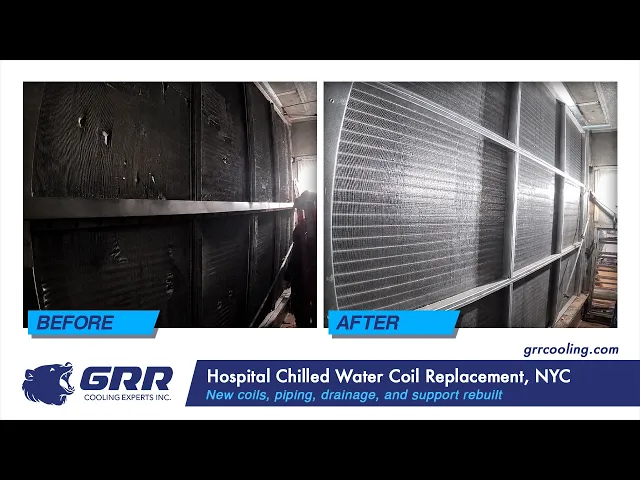
Hospital Chilled-Water Coil Section Retrofit
Hospital Chilled-Water Coil Section Retrofit
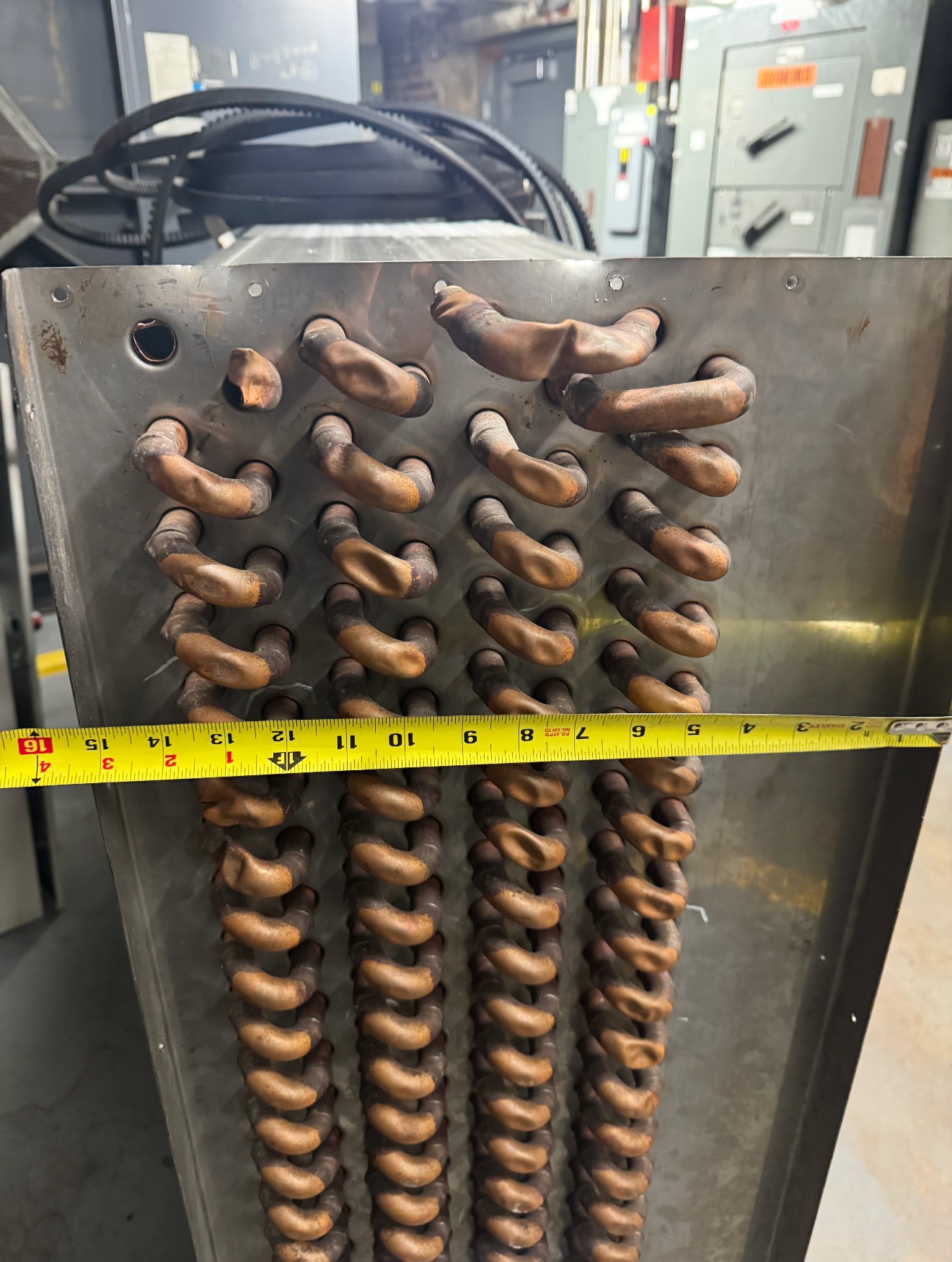
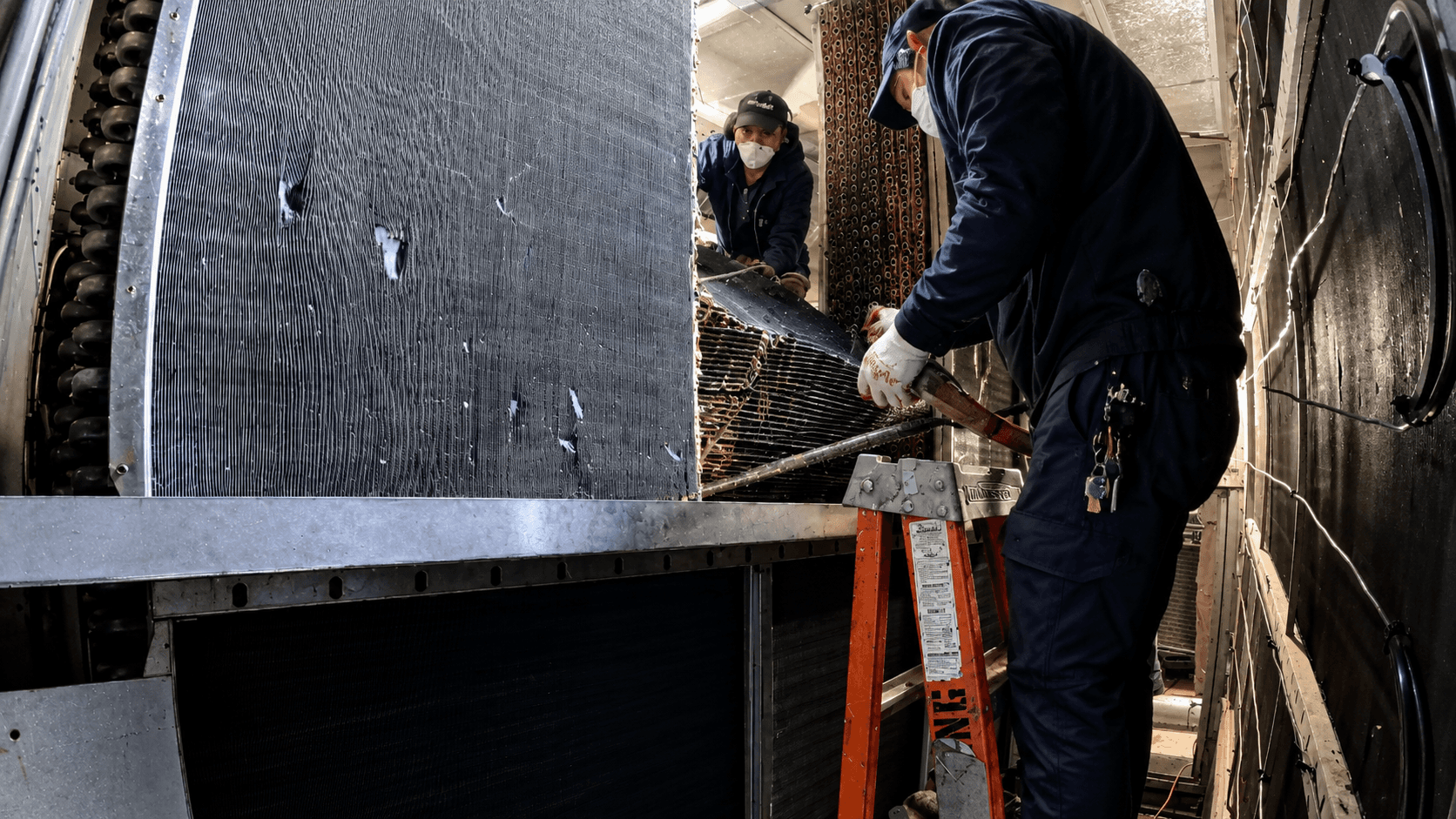
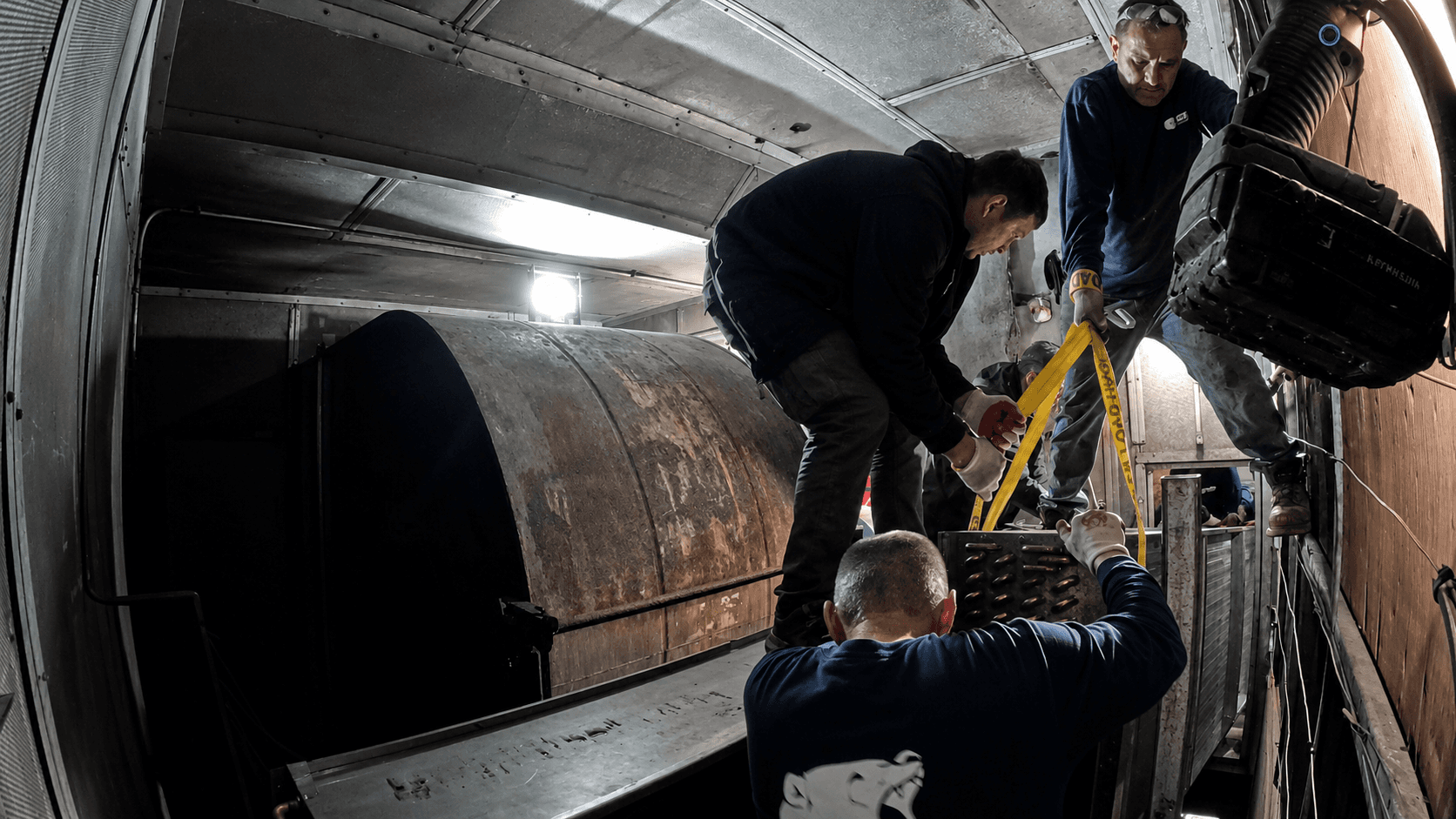
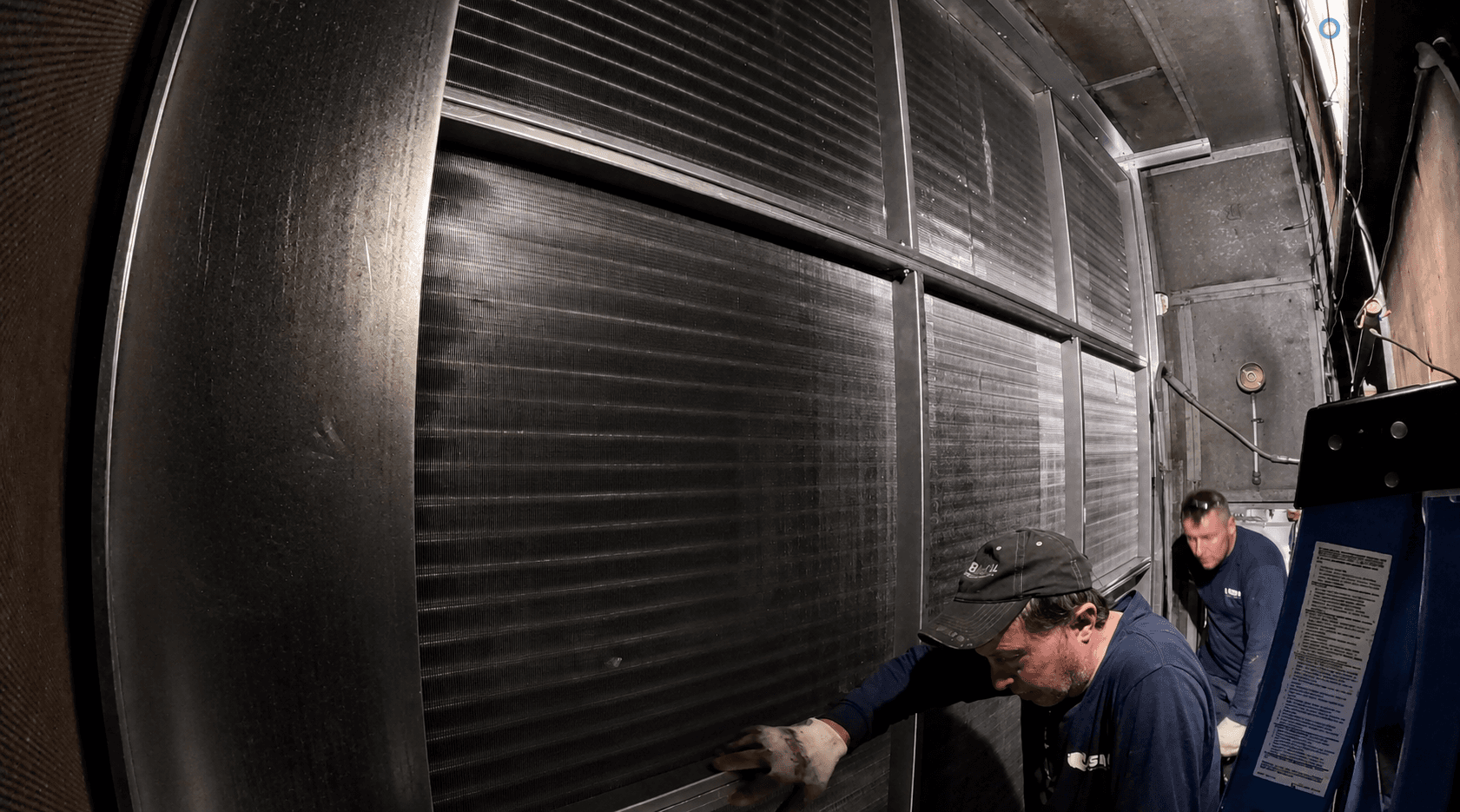
GRR Cooling Experts completed a hospital HVAC retrofit project in New York City, replacing a damaged chilled water coil section inside an existing operating room air handling unit.
The original setup used two large chilled water coils. Due to access and fit-up limitations inside the existing unit, a direct like-for-like replacement was not practical. GRR rebuilt the section around three new chilled water coils, with modified piping, new drainage, rebuilt support details, and closure panels around the rebuilt coil section.
In a hospital OR environment, chilled water coil replacement has to do more than replace old components. The solution must fit the existing unit, support proper drainage, reconnect cleanly into the system, and help maintain dependable long-term operation.
The challenge
Older hospital HVAC systems rarely allow simple one-for-one replacement logic. Existing unit geometry, access limits, coil size, piping location, drainage conditions, and field coordination all affect what can be installed successfully.
For this project, the original two-coil layout could not be replaced directly. The coil section had to be rebuilt in a way that worked within the realities of the existing OR air handling unit.
The solution
GRR Cooling Experts reworked the original two-coil setup into a three-coil replacement layout adapted to the existing unit and field conditions.
The project scope included:
🔹 removal of the existing chilled water coils
🔹 installation of three new chilled water coils
🔹 modification and reconnection of chilled water piping
🔹 new welded piping connections
🔹 fabrication and installation of new drain pans
🔹 sheet metal support beneath the coil area
🔹 new drain piping to the nearest available drain point
🔹 insulation of new piping connections
🔹 closure panels around the rebuilt coil section
This created a field-adapted chilled water coil replacement solution without requiring a direct like-for-like approach that would not fit the real site conditions.
System specifications
🔹 System type: Hospital OR air handling unit
🔹 Retrofit type: Chilled water coil replacement
🔹 Original configuration: Two large chilled water coils
🔹 New configuration: Three chilled water coils
🔹 Piping: Modified and reconnected chilled water piping
🔹 Drainage: Main and intermediate drain pans with new drain piping
🔹 Support: Rebuilt sheet metal support beneath the coil area
🔹 Closure: Sheet metal panels installed around the rebuilt coil section
Project execution
Execution began with removal of the existing chilled water coils and review of the coil section conditions, access limits, and piping layout.
Because the original coil configuration could not be replaced like-for-like, the team adapted the installation around a three-coil layout. This required field coordination across fit-up, piping modification, drainage, insulation, support, and final closure.
In hospital HVAC retrofit work, results depend on more than the replacement part. Access, logistics, field-built adaptation, and clean integration all shape the final outcome.
Result
This hospital chilled water coil replacement rebuilt a damaged coil section into a more practical three-coil configuration adapted to the existing unit.
Key outcomes included:
🔹 rebuilt chilled water coil section
🔹 modified piping and new welded connections
🔹 improved drainage layout
🔹 rebuilt support beneath the coil area
🔹 cleaner closure around the installed coils
🔹 improved serviceability for future maintenance
🔹 stronger long-term operating path than a simple patch approach
For critical healthcare environments, the right retrofit path is the one that works in the real unit, not just on paper.
Technology and support
This project used a field-adapted chilled water coil replacement approach to rebuild the coil section around existing hospital HVAC conditions.
The work required coordination across coil installation, piping, drainage, insulation, sheet metal support, and clean closure inside an existing operating room air handling unit.
Frequently asked questions
Q: Why was this project treated as a retrofit instead of a basic coil replacement?
A: Because the original two large chilled water coils could not be replaced like-for-like due to access and fit-up limitations inside the existing unit. GRR rebuilt the section around three new chilled water coils adapted to the real field conditions.Q: Why change the layout from two coils to three coils?
A: The three-coil layout made the replacement practical within the existing unit and access constraints. It allowed the team to install the new coil section while modifying the piping, drainage, and support details around the actual site conditions.Q: What makes hospital OR unit coil replacement more demanding?
A: OR unit work requires careful coordination because coil condition can affect heat transfer, drainage, airflow performance, serviceability, and dependable system operation. The work also has to be completed cleanly inside an active healthcare environment.Q: What was included in this project?
A: The project included removal of the existing chilled water coils, installation of three new chilled water coils, modified chilled water piping, new welded connections, new drain pans, sheet metal support, drain piping, insulation, and closure panels around the rebuilt coil section.
Related resources
Request a hospital HVAC retrofit review
If your hospital or critical facility in NYC is evaluating an older coil section, air handling unit, or difficult HVAC retrofit, GRR Cooling Experts can help review existing conditions and define a practical retrofit path.
GRR Cooling Experts completed a hospital HVAC retrofit project in New York City, replacing a damaged chilled water coil section inside an existing operating room air handling unit.
The original setup used two large chilled water coils. Due to access and fit-up limitations inside the existing unit, a direct like-for-like replacement was not practical. GRR rebuilt the section around three new chilled water coils, with modified piping, new drainage, rebuilt support details, and closure panels around the rebuilt coil section.
In a hospital OR environment, chilled water coil replacement has to do more than replace old components. The solution must fit the existing unit, support proper drainage, reconnect cleanly into the system, and help maintain dependable long-term operation.
The challenge
Older hospital HVAC systems rarely allow simple one-for-one replacement logic. Existing unit geometry, access limits, coil size, piping location, drainage conditions, and field coordination all affect what can be installed successfully.
For this project, the original two-coil layout could not be replaced directly. The coil section had to be rebuilt in a way that worked within the realities of the existing OR air handling unit.
The solution
GRR Cooling Experts reworked the original two-coil setup into a three-coil replacement layout adapted to the existing unit and field conditions.
The project scope included:
🔹 removal of the existing chilled water coils
🔹 installation of three new chilled water coils
🔹 modification and reconnection of chilled water piping
🔹 new welded piping connections
🔹 fabrication and installation of new drain pans
🔹 sheet metal support beneath the coil area
🔹 new drain piping to the nearest available drain point
🔹 insulation of new piping connections
🔹 closure panels around the rebuilt coil section
This created a field-adapted chilled water coil replacement solution without requiring a direct like-for-like approach that would not fit the real site conditions.
System specifications
🔹 System type: Hospital OR air handling unit
🔹 Retrofit type: Chilled water coil replacement
🔹 Original configuration: Two large chilled water coils
🔹 New configuration: Three chilled water coils
🔹 Piping: Modified and reconnected chilled water piping
🔹 Drainage: Main and intermediate drain pans with new drain piping
🔹 Support: Rebuilt sheet metal support beneath the coil area
🔹 Closure: Sheet metal panels installed around the rebuilt coil section
Project execution
Execution began with removal of the existing chilled water coils and review of the coil section conditions, access limits, and piping layout.
Because the original coil configuration could not be replaced like-for-like, the team adapted the installation around a three-coil layout. This required field coordination across fit-up, piping modification, drainage, insulation, support, and final closure.
In hospital HVAC retrofit work, results depend on more than the replacement part. Access, logistics, field-built adaptation, and clean integration all shape the final outcome.
Result
This hospital chilled water coil replacement rebuilt a damaged coil section into a more practical three-coil configuration adapted to the existing unit.
Key outcomes included:
🔹 rebuilt chilled water coil section
🔹 modified piping and new welded connections
🔹 improved drainage layout
🔹 rebuilt support beneath the coil area
🔹 cleaner closure around the installed coils
🔹 improved serviceability for future maintenance
🔹 stronger long-term operating path than a simple patch approach
For critical healthcare environments, the right retrofit path is the one that works in the real unit, not just on paper.
Technology and support
This project used a field-adapted chilled water coil replacement approach to rebuild the coil section around existing hospital HVAC conditions.
The work required coordination across coil installation, piping, drainage, insulation, sheet metal support, and clean closure inside an existing operating room air handling unit.
Frequently asked questions
Q: Why was this project treated as a retrofit instead of a basic coil replacement?
A: Because the original two large chilled water coils could not be replaced like-for-like due to access and fit-up limitations inside the existing unit. GRR rebuilt the section around three new chilled water coils adapted to the real field conditions.Q: Why change the layout from two coils to three coils?
A: The three-coil layout made the replacement practical within the existing unit and access constraints. It allowed the team to install the new coil section while modifying the piping, drainage, and support details around the actual site conditions.Q: What makes hospital OR unit coil replacement more demanding?
A: OR unit work requires careful coordination because coil condition can affect heat transfer, drainage, airflow performance, serviceability, and dependable system operation. The work also has to be completed cleanly inside an active healthcare environment.Q: What was included in this project?
A: The project included removal of the existing chilled water coils, installation of three new chilled water coils, modified chilled water piping, new welded connections, new drain pans, sheet metal support, drain piping, insulation, and closure panels around the rebuilt coil section.
Related resources
Request a hospital HVAC retrofit review
If your hospital or critical facility in NYC is evaluating an older coil section, air handling unit, or difficult HVAC retrofit, GRR Cooling Experts can help review existing conditions and define a practical retrofit path.